 EN
EN

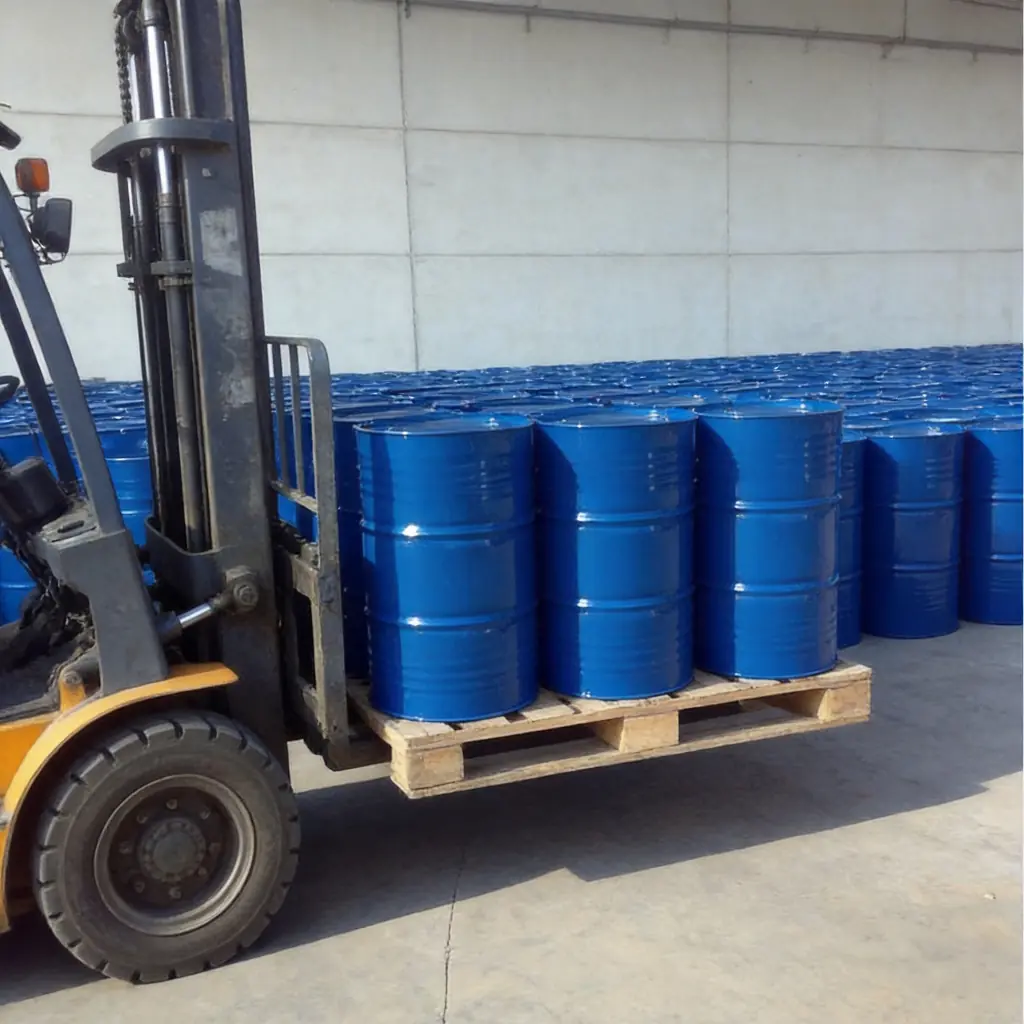
China is an important sourcing base for epoxy resins and curing agents. International buyers can choose from manufacturers, authorized distributors, exporters, and specialty chemical suppliers serving coatings, adhesives, flooring, electrical insulation, composites, and construction applications.
The number of options can make supplier selection difficult. A low quotation does not prove that two products have the same chemistry, specification limits, consistency, documentation, or application performance. Production capability, quality control, technical communication, export experience, and delivery reliability can all affect the true cost of a purchasing decision.
This guide provides a practical process for evaluating an epoxy resin supplier in China, qualifying materials, comparing offers, and reducing technical and commercial risk.
1. Define the Product and Application Requirements
Prepare a written requirement before requesting quotations. Without a common specification, suppliers may quote grades that share a general product name but differ in viscosity, purity, modification, or intended use.
For epoxy resins, the specification may include:
-
Resin chemistry and whether the material is modified or unmodified.
-
Epoxy equivalent weight (EEW) or epoxy value, using clearly stated units.
-
Viscosity at a defined temperature and test method.
-
Color, appearance, and volatile content where relevant.
-
Hydrolysable chlorine, total chlorine, water, or other application-specific limits.
-
Required packaging, storage conditions, and shelf life.
-
Intended formulation, processing method, and final application.
For curing agents, relevant parameters may include chemistry, amine value, viscosity, color, active hydrogen equivalent weight (AHEW), recommended mix ratio, pot life, thin-film cure, hardness development, and resin compatibility. Not every test applies to every product family, so specifications should reflect the chemistry and actual use case.
If the project uses standard bisphenol-A liquid resin, buyers can review Hanepoxy’s as initial candidates. The current TDS and batch specification should be checked before sample qualification.
2. Identify the Supplier’s Actual Business Model
A supplier may be a manufacturer, distributor, trading company, or an organization combining production and distribution. None of these models is automatically superior; the right choice depends on the buyer’s volume, technical needs, product range, and risk controls.
| Supplier Model | Potential Advantages | Points to Verify | May Be Suitable When |
|---|---|---|---|
| Manufacturer | Direct production access, process knowledge, stable volume, and potential customization | Actual production site, ownership, capacity, quality controls, product scope, and export capability | The buyer needs repeat volume, technical coordination, or controlled specifications |
| Authorized distributor | Local inventory, formal manufacturer relationship, and smaller or faster deliveries | Authorization status, storage, traceability, document control, and complaint process | The buyer values regional stock, credit terms, or manufacturer-backed supply |
| Trading or sourcing company | Broad portfolio, multi-product consolidation, and sourcing flexibility | Original producer identity, traceability, inspection process, technical competence, and change control | The order combines products or requires flexible supplier coordination |
| Formulator or specialty supplier | Application-focused grades, technical support, and customized performance | Manufacturing versus outsourced steps, formulation ownership, consistency, and scale-up capacity | The buyer needs a system solution rather than a generic commodity grade |
Do not rely only on website wording. Request the legal company name, facility address, business scope, quality certifications, production or sourcing flow, and the identity of the entity that will appear on contracts, invoices, SDS documents, and export records.
When the purchase is strategically important, consider a factory audit, live video audit, third-party inspection, or quality-system review. The depth of verification should match the order value and the consequences of failure.
3. Evaluate Quality and Manufacturing Controls
Reliable supply requires more than a list of laboratory values. Buyers should understand how the supplier controls incoming raw materials, production, batch release, retained samples, nonconforming product, and specification changes.
Ask the supplier to explain:
-
Which tests are performed on every batch and which are periodic.
-
Whether reported values are release specifications or typical data.
-
How instruments and test methods are controlled.
-
How batches and raw materials are traced.
-
How long retained samples and production records are kept.
-
How out-of-specification results and customer complaints are investigated.
-
Whether customers receive advance notice of manufacturing, feedstock, site, or specification changes.
-
How production planning and safety stock support delivery commitments.
Certificates can support an assessment, but they do not replace product-specific controls. A quality-management certificate does not prove that a particular resin will perform correctly in the buyer’s formulation.
4. Review Technical and Compliance Documents
The document set should match the exact product, manufacturer, grade, and market being supplied.
Technical Data Sheet
A TDS normally presents product identity, typical properties or specifications, recommended applications, handling information, and sometimes starting formulation guidance. Check units, test temperatures, test methods, revision date, and whether values are guaranteed limits or typical results.
Safety Data Sheet
An SDS provides hazard, handling, storage, first-aid, transport, and disposal information. Confirm that the product name and composition correspond to the purchased material and that the document is suitable for the destination language and regulatory framework.
Certificate of Analysis
A COA reports results for a specific batch. Before ordering, ask for a representative recent COA and confirm which results will be included with commercial shipments. The COA limits should agree with the approved specification.
Compliance and Transport Documents
Additional documents may be required for chemical registration, labeling, dangerous-goods transport, restricted substances, customs clearance, or customer-specific programs. Requirements vary by chemistry, destination, application, and shipment mode. Buyers should confirm them with qualified regulatory and logistics specialists rather than relying on a generic export package.
5. Qualify Samples Before Scaling Up
Sample testing connects a paper specification with real application performance. A practical qualification sequence is:
-
Agree on the target specification and test methods.
-
Request a sample from the proposed commercial grade and, where possible, a traceable production batch.
-
Confirm identity and key incoming quality properties.
-
Test the material using the normal formulation, equipment, and cure conditions.
-
Compare it with the current approved material or predefined acceptance criteria.
-
Conduct a pilot or production trial if laboratory results are acceptable.
-
Document approval limits before placing a larger order.
For formulated systems, evaluate the resin and curing agent together. A resin can meet its individual EEW and viscosity limits yet behave differently because of trace impurities, diluent type, moisture, or interaction with the hardener and additives.
Depending on the application, testing may include mix viscosity, pot life, gel time, thin-film set, exotherm, hardness development, adhesion, appearance, chemical resistance, thermal properties, dielectric performance, or composite processing behavior. Use the same methods and conditions for every candidate.
6. Compare Suppliers on Equal Technical and Commercial Terms
Use a structured comparison so that differences are visible before the final decision.
| Evaluation Area | Evidence to Request | Key Questions or Warning Signs |
|---|---|---|
| Product specification | Approved specification, TDS, and recent COAs | Are limits, units, test methods, and grade identities consistent? |
| Sample performance | Internal laboratory and pilot-trial results | Was the commercial formulation tested under realistic conditions? |
| Quality control | Batch-release plan, traceability process, and retained-sample policy | Are only typical values offered, with no agreed release limits? |
| Commercial terms | Formal quotation stating quantity, packaging, Incoterm, payment, and validity | Are important charges or responsibilities missing? |
| Logistics | Lead time, packing details, transport classification, and shipping documents | Is the packaging suitable, and who is responsible at each stage? |
| Technical service | Named technical contact and support process | Can the supplier answer formulation and complaint questions clearly? |
| Supply resilience | Capacity information, production plan, and contingency arrangements | Is the offer dependent on a single plant, feedstock, or undocumented source? |
| Change control | Written notification procedure | Can the origin or formulation change without buyer approval? |
Compare total landed and application cost, not only the price per kilogram or tonne. Include packaging, palletization, freight, insurance, duties, port charges, financing, inventory, testing, yield, cure time, rejection risk, and requalification cost.
A higher quotation may offer better value if it reduces variability, downtime, or repeated laboratory work. Conversely, technical support should be evaluated through evidence and responsiveness rather than accepted as a general sales claim.
7. Confirm Export and Logistics Capability
Before issuing a purchase order, confirm:
-
Product classification and whether the planned transport mode has special requirements.
-
Packaging type, net and gross weight, pallet configuration, and container loading plan.
-
Labeling, marks, documents, and language requirements.
-
Normal production lead time and the point from which lead time is calculated.
-
Shelf life remaining at shipment and required storage temperature.
-
Incoterm version, named place or port, insurance responsibility, and transfer of risk.
-
Destination duties, chemical controls, trade remedies, and import restrictions.
-
Procedure for leakage, damage, shortage, delay, or nonconforming material.
Export experience with one country does not guarantee compliance in another. Product classification and import obligations should be checked for the specific grade and destination.
8. Assess Communication and Technical Support
Communication quality during qualification often predicts how a supplier will handle production issues later. Useful indicators include clear answers, consistent documents, realistic lead times, willingness to clarify test methods, and prompt escalation of technical questions.
For curing-agent projects, buyers may compare Hanepoxy’s and according to the required pot life, cure conditions, appearance, flexibility, and chemical performance. Candidate selection should be followed by formulation testing rather than treated as proof of direct equivalence.
Agree in advance on who will manage technical questions, complaints, corrective actions, and change notices. This is particularly valuable when purchasing specialty products or when production depends on a narrow application window.
9. Common Sourcing Mistakes
Choosing Only on Price
An unusually low quotation may reflect a different grade, specification, origin, active content, packaging basis, Incoterm, or quality-control level. Resolve those differences before comparing prices.
Skipping Sample or Production Trials
Paper compliance does not guarantee formulation compatibility. Skipping qualification can lead to production interruption, rework, or changes in finished-product performance.
Treating Typical Values as Guaranteed Limits
Typical values describe representative performance; they may not be contractual release criteria. Agree on specification limits and test methods where variation matters.
Ignoring Storage and Shelf Life
Temperature, moisture, contamination, and storage time can affect chemical products. Confirm storage requirements and remaining shelf life before selecting order quantity.
Overlooking Import Compliance
Documents that work for one destination may not satisfy another. Confirm chemical, labeling, transport, and customs requirements before shipment.
Depending on One Unqualified Source
An alternative supplier can improve resilience only after its material passes the same technical and commercial qualification. Avoid switching grades during a disruption without controlled testing.
10. Frequently Asked Questions
How can I find a reliable epoxy resin supplier in China?
Start with a written technical requirement, verify the supplier’s legal identity and business model, review quality controls and documents, test representative samples, and compare logistics, communication, and total cost. Use an audit or independent inspection when the purchase risk justifies it.
Should I buy from a manufacturer or a trading company?
Either can be suitable. Manufacturers may provide direct production access and scale, while trading companies may consolidate products or offer sourcing flexibility. The decision should depend on traceability, quality control, technical competence, delivery capability, and contractual accountability—not the label alone.
What information should I provide when requesting a quotation?
Provide the resin or hardener chemistry, specification, application, estimated annual and order quantity, packaging, destination, required documents, target delivery date, and preferred Incoterm. Include test methods or an existing benchmark where appropriate.
How can I reduce quality risk when importing epoxy resin?
Use an agreed specification, approve a representative sample, test the commercial formulation, require batch COAs, define inspection and acceptance procedures, retain samples, and establish written rules for changes and nonconforming shipments.
11. Conclusion
Choosing an epoxy resin supplier in China requires a structured evaluation of technical fit, quality control, documentation, commercial terms, logistics, and service. The objective is not simply to identify the lowest quotation, but to select a supply arrangement that performs consistently in the buyer’s process.
Clear specifications, traceable samples, controlled testing, equal-term quotation comparisons, and written acceptance criteria provide a stronger basis for long-term sourcing. Where the material is critical, supplier verification and a qualified alternative source can further reduce operational risk.
Looking for epoxy resin or curing-agent candidates from China?
Table of Contents
- Introduction
- 1. Define the Product and Application Requirements
- 2. Identify the Supplier’s Actual Business Model
- 3. Evaluate Quality and Manufacturing Controls
- 4. Review Technical and Compliance Documents
- 5. Qualify Samples Before Scaling Up
- 6. Compare Suppliers on Equal Technical and Commercial Terms
- 7. Confirm Export and Logistics Capability
- 8. Assess Communication and Technical Support
- 9. Common Sourcing Mistakes
- 10. Frequently Asked Questions
- 11. Conclusion