 EN
EN

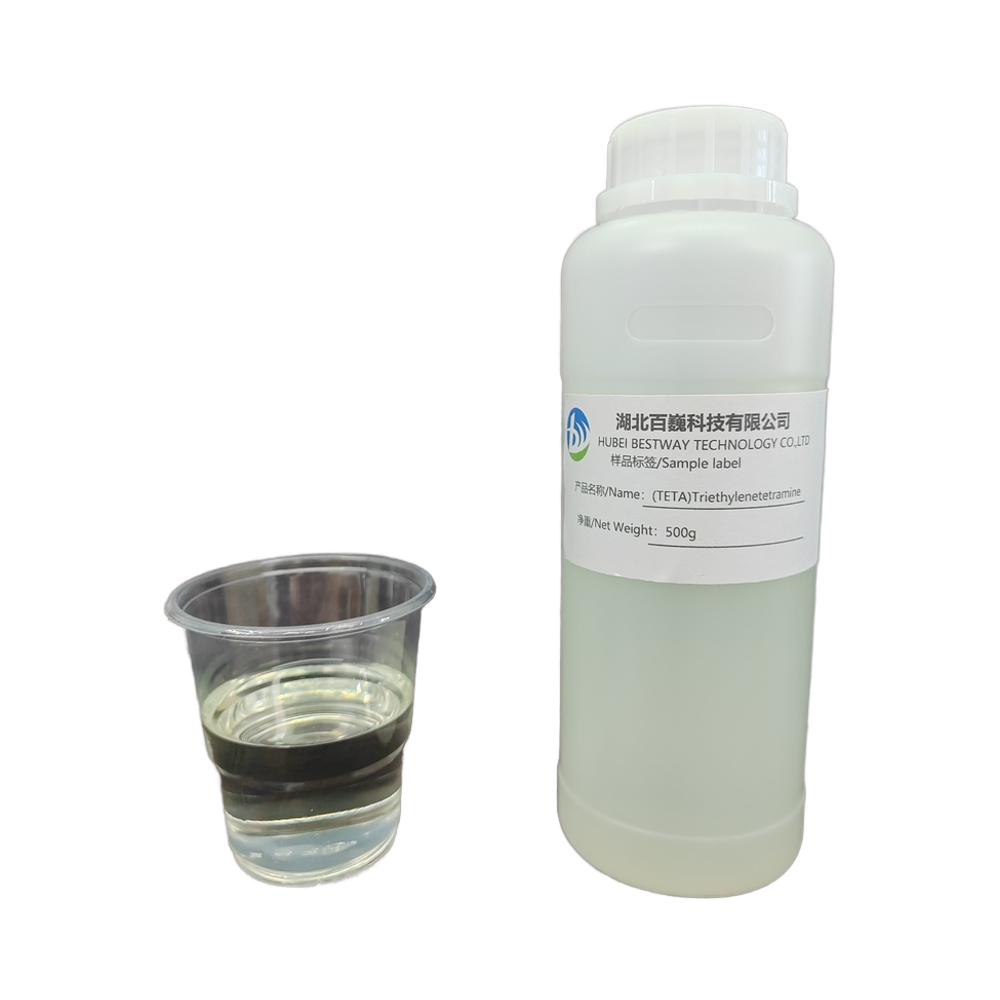
How TETA Interacts with Inorganic Pigment Surfaces
Amine–hydroxyl and amine–silanol condensation pathways on metal oxide pigments
Triethylenetetramine, commonly known as TETA, creates strong chemical bonds with inorganic pigments through condensation reactions. These happen when the primary amines in TETA react with hydroxyl groups (-OH) found on surfaces of metal oxides like titanium dioxide (TiO2) or iron oxide (Fe2O3), forming stable NH2...O==M connections. The secondary amine groups also participate by adding to silanol groups (Si-OH) present on silica based pigments. Because TETA has four functional groups, it can form multiple points of attachment at once, creating a sort of crosslinked network at the interface. The speed of these reactions follows what scientists call Langmuir-type kinetics, which means they get faster as temperatures rise above about 60 degrees Celsius. Compared to single-functional amines, this multi-point binding significantly reduces pigment clumping in epoxy systems, making formulations much more stable and effective overall.
Competitive adsorption: TETA versus moisture at pigment interfaces
Moisture strongly competes with TETA for adsorption sites on pigment surfaces, reducing effective binding by 40–60% at 65% relative humidity. Adsorption equilibrium aligns with the modified BET model:
| Factor | Impact on TETA Adsorption |
|---|---|
| Relative humidity | >60% RH decreases binding by 50% |
| Surface porosity | Micropores favor H2O over TETA |
| Temperature | >80°C displaces physisorbed water |
| Pigment acidity | Basic surfaces (pH > 9) favor TETA |
Although water binds more readily through physisorption (activation energy: 10–15 kJ/mol), TETA dominates chemisorption due to its higher activation barrier (25–35 kJ/mol). For optimal interfacial bonding, pigments must be pre-dried to ≤0.5% moisture content—ensuring amine groups access reactive surface sites without competitive hydration.
TETA as a Surface Modifier for Enhanced Pigment Dispersion
Case study: TETA-mediated stabilization of TiO2 in bisphenol-A epoxy resins
TETA improves how TiO2 spreads out in bisphenol-A epoxy systems mainly because of hydrogen bonds and electrostatic forces between the pigment and resin. The molecule's polyamine structure basically acts like a shield, creating both physical space and electrical charges that stop particles from clumping together. What does this mean in practice? We see some real benefits: about 15 to maybe even 20 percent better opacity, roughly 30% less variation in viscosity when working with the material, plus it keeps around 95% of its original colorfastness after being exposed to UV light for 1000 hours straight. And here's another bonus these enhancements actually lengthen the usable life of the coating mixture without making the final film any softer or less resistant to chemicals something absolutely essential for serious industrial applications where quality matters most.
Comparative performance against aminosilanes in clay exfoliation
In nanoclay modification, TETA outperforms conventional aminosilanes in exfoliation efficiency. Its compact, flexible multidentate structure penetrates clay interlayers more effectively than bulkier silanes, achieving a 50% higher aspect ratio dispersion in epoxy composites. Benefits include:
- 25% greater tensile modulus enhancement at equivalent loading
- 40% lower oxygen permeability
- Curing at 120°C (vs. 150°C for aminosilanes), improving energy efficiency
Unlike aminosilanes, TETA avoids silanol condensation side reactions and exhibits faster diffusion kinetics. Thermal gravimetric analysis confirms superior thermal stability: TETA-modified nanocomposites maintain integrity up to 300°C—35°C beyond the decomposition onset of silane-treated counterparts.
Impact of TETA on Interfacial Adhesion and Coating Performance
Interfacial toughness enhancement in TETA-cured epoxy coatings (DMA/AFM evidence)
The TETA compound really boosts the connection between epoxy and pigments by forming strong chemical bonds with those hydroxyl groups on the surface, especially when dealing with silica-based materials. When we run Dynamic Mechanical Analysis tests, we typically see around 15 to 22 percent improvement in the glass transition temperature compared to regular amine hardeners. This jump in Tg suggests there's simply more crosslinking happening in the material. Looking at it under Atomic Force Microscopy tells another story too. The measurements show about 40% more energy being absorbed at the interface. Why? Because those flexible amine chains in TETA can take up mechanical stress without breaking apart. And these improvements aren't just theoretical either. Real world tests on adhesion performance back up what we're seeing in the lab data.
| Performance Metric | TETA-Cured Systems | Standard Amine Hardeners |
|---|---|---|
| Pull-off adhesion (ASTM D4541) | ≥8.2 MPa | 5.1–6.3 MPa |
| Salt-spray resistance | 1,500+ hours | <900 hours |
| Abrasion loss (Taber) | 28 mg/1,000 cycles | 45–60 mg |
This interfacial reinforcement curbs microcrack initiation and propagation under thermal cycling (−40°C to 85°C)—a critical failure mode in aerospace and marine applications where delamination often originates at pigment–resin boundaries. AFM phase imaging confirms near-absence of microvoids, underscoring TETA’s role in eliminating defect-prone interfaces.
FAQs
What is Triethylenetetramine (TETA)?
TETA is a chemical compound with four amine groups, commonly used for its strong bonding capabilities with inorganic pigments through condensation reactions.
How does TETA improve epoxy system formulations?
TETA reduces pigment clumping through multi-point binding, enhancing stability and effectiveness of the formulations.
Why is moisture a concern for TETA adsorption?
Moisture competes with TETA for adsorption sites, especially at high humidity, which can reduce its effectiveness in binding with pigment surfaces.
In what applications is TETA most beneficial?
TETA is particularly useful in industrial applications where enhanced pigment dispersion, coating performance, and interfacial toughness are desired.