 EN
EN

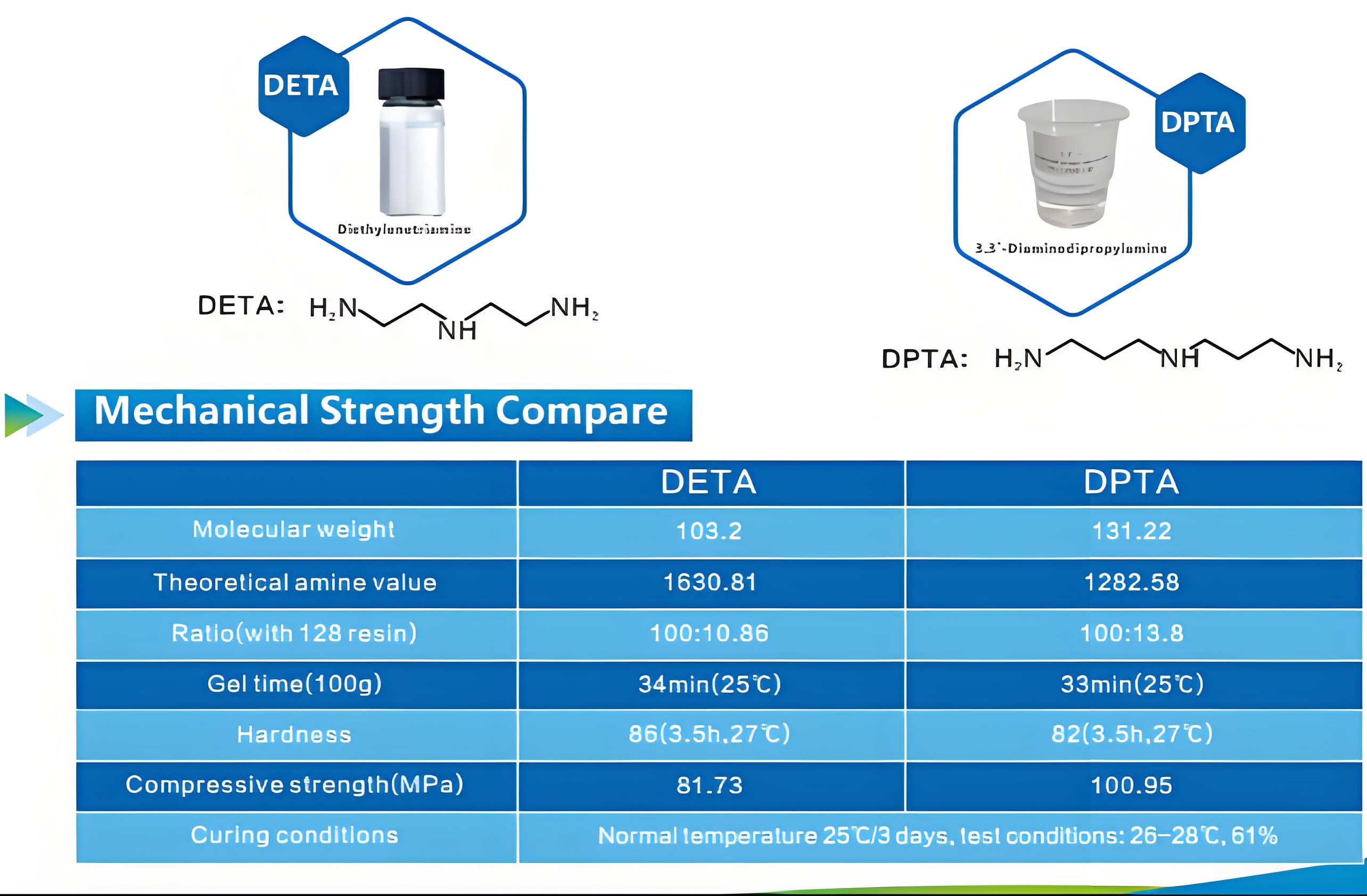
ক্রেতাদের জন্য নির্বাহী সারাংশ
| সিদ্ধান্ত গ্রহণের কারণ | ডেটা | DPTA | ক্রয় কর্মসূচি |
|---|---|---|---|
| রাসায়নিক নাম | ডাইইথিলেনট্রিঅ্যামাইন | ৩,৩-ডাইঅ্যামিনোডাইপ্রোপাইলঅ্যামিন | এসডিএস এবং ক্রয় অর্ডারে যাচাই করুন |
| আণবিক সূত্র | C4H13N3 | C6H17N3 | সিওএ-এর সাথে মিলিয়ে দেখুন |
| আণবিক ওজন | 103.2 | 131.22 | সরাসরি সমতুল্য ফ্যাক্টর হিসাবে ব্যবহার করবেন না |
| CAS নম্বর | সরবরাহকারীর এসডিএস দিয়ে নিশ্চিত করুন | 56-18-8 | আমদানি নথিপত্র যাচাই করুন |
| ব্যাকবোন গঠন | ছোট ইথিলিনামিন | দীর্ঘ প্রোপিলিন-ভিত্তিক | সূত্রের প্রভাব মূল্যায়ন করুন |
| সরবরাহকৃত DPTA TDS মানগুলি | DETA-এর জন্য সরবরাহ করা হয়নি | স্বচ্ছ বর্ণহীন তরল; সান্দ্রতা ২৫°সে-তে <১৫ mPa.s; অ্যামিন মান ১২৮২ ± ২০ mgKOH/g; বিশুদ্ধতা ≥৯৮%; ঘনত্ব ২৫°সে-তে ০.৯২–০.৯৬ g/cm³; আর্দ্রতা ≤০.৫%; প্যাকেজিং ১৯০ kg/ড্রাম | বর্তমান ব্যাচের COA-এর বিরুদ্ধে নিশ্চিত করুন |
| প্রধান তুলনা নিয়ম | প্রযুক্তিগত মানগুলির ভিত্তিতে তুলনা করুন | এ এইচ ই ডব্লিউ, অ্যামিন মান, সান্দ্রতা, জেল সময়, তাপ নির্গমন, কিউরিং গতি, যান্ত্রিক ও রাসায়নিক প্রতিরোধের তুলনা করুন | প্রতিস্থাপনের আগে নমুনা পরীক্ষা চালান |
ক্রেতার জন্য মূল বিষয়: ডিপিটিএ ডিইটিএ-এর সরাসরি প্রতিস্থাপন নয়। টিডিএস মানগুলি বর্তমান ব্যাচের সিওএ-এর বিরুদ্ধে নিশ্চিত করার পর এবং লক্ষ্য ফর্মুলেশনে যাচাই করার পর মাত্র উপযোগী। সিদ্ধান্ত নেওয়ার আগে সর্বদা সমতুল্য ডিইটিএ ডেটা সেট অনুরোধ করুন।
গঠনগত ও বিশেষকরণগত পার্থক্য
আণবিক ওজনের চেয়ে ব্যাকবোন দৈর্ঘ্য হল মূল্যায়নের জন্য প্রাথমিক গঠনগত পরিবর্তনশীল। ডিইটিএ-এর ছোট ইথিলিনঅ্যামিন শৃঙ্খল ডিপিটিএ-এর দীর্ঘ প্রোপিলিন-ভিত্তিক শৃঙ্খলের তুলনায় সক্রিয় অ্যামিন গ্রুপগুলিকে আরও কাছাকাছি স্থাপন করে। এই দূরত্ব স্টয়েশিওমেট্রি এবং ক্রস-লিঙ্ক নেটওয়ার্ক গঠনকে সরাসরি প্রভাবিত করে।
ডিইটিএ একটি ব্যাপকভাবে ব্যবহৃত অ্যালিফ্যাটিক প্রাথমিক অ্যামিন যা দ্রুত কক্ষ তাপমাত্রায় কিউরিং, খুব উচ্চ তাপ নির্গমন এবং কম উচ্চ তাপমাত্রায় প্রতিরোধের জন্য পরিচিত। এপক্সি কিউরিং-এ, নিউক্লিওফিলিক প্রতিক্রিয়াশীলতা অ্যালিফ্যাটিক, সাইক্লোঅ্যালিফ্যাটিক এবং অ্যারোম্যাটিক অ্যামিনগুলিকে পৃথক করে।
ডিপিটিএ হলো একটি অ্যালিফ্যাটিক অ্যামিন যার গঠনে দীর্ঘতর প্রোপিলিন-ভিত্তিক সংরচনা রয়েছে। আপনার বিশেষ ইপোক্সি সিস্টেমে এই গঠনগত পার্থক্যটি জেল সময়, সর্বোচ্চ তাপ উৎপাদন, কিউরিং গতি এবং কিউর্ড নেটওয়ার্কের নমনীয়তা কীভাবে প্রভাবিত করে— তা আপনার সরবরাহকারীর সঙ্গে নিশ্চিত করুন। যেহেতু ইপোক্সি রেজিনগুলি কম সান্দ্রতা বিশিষ্ট তরল থেকে শুরু করে কঠিন শ্রেণির পর্যন্ত বিস্তৃত, তাই ফর্মুলেশন পরিবেশ অ্যামিন নির্বাচনের মতোই গুরুত্বপূর্ণ।
সক্রিয় হাইড্রোজেন সমতুল্য ওজন (এএইচইডব্লিউ) হলো ব্যবহারিক তুলনা মেট্রিক। হার্ডেনার লোডিং অবশ্যই ওজন অনুসারে ১:১ প্রতিস্থাপন নয়, বরং স্টোইকিওমেট্রিক ভারসাম্য অনুসরণ করে করতে হবে। তৃতীয়-শ্রেণির অ্যামিন ছাড়া অ্যালিফ্যাটিক অ্যামিন সিস্টেমগুলি সাধারণত তাত্ত্বিক স্টোইকিওমেট্রিক মানের কাছাকাছি লোড করা হয়, অন্যদিকে তৃতীয়-শ্রেণির অ্যামিন সমৃদ্ধ সিস্টেমগুলিতে সেই ভিত্তির নীচে সামান্য সমন্বয় করা যেতে পারে।
বিবরণী ডেটা এবং সার্টিফিকেট অফ অ্যানালাইসিস (সিওএ) অগ্রাধিকারগুলি
| ডিপিটিএ প্যারামিটার | সরবরাহকৃত টেকনিক্যাল ডেটা শীট (টিডিএস) মান | কেন এটা ব্যাপার |
|---|---|---|
| চেহারা | স্বচ্ছ বর্ণহীন তরল | দূষণ বা জারণের জন্য দ্রুত দৃশ্যমান পরীক্ষা |
| সান্দ্রতা | ২৫°সে-তে <১৫ মিলিপাসকাল সেকেন্ড | মিশ্রণ, ওয়েটিং এবং হ্যান্ডলিং-কে প্রভাবিত করে; ডিইটিএ সিওএ-এর সঙ্গে তুলনা করুন |
| আমোনিয়া মান | ১২৮২ ± ২০ মিগ্রামকেওএইচ/গ্রাম | মূল প্রতিক্রিয়াশীলতা নির্দেশক; ব্যাচ COA দ্বারা নিশ্চিত করতে হবে |
| শুদ্ধতা | ≥98% | অশুদ্ধি প্রোফাইল রং এবং অবাঞ্ছিত পার্শ্ব প্রতিক্রিয়াকে প্রভাবিত করতে পারে |
| ঘনত্ব | ২৫°সে-তে ০.৯২–০.৯৬ গ্রাম/ঘন সেন্টিমিটার | আয়তন/ওজন রূপান্তর এবং ড্রাম যাচাইয়ের জন্য অপরিহার্য |
| আঁটোময়তা | ≤0.5% | অতিরিক্ত আর্দ্রতা কিউর গুণগত মান এবং পৃষ্ঠ সমাপ্তি ক্ষতিগ্রস্ত করতে পারে |
| প্যাকেজিং | ১৯০ কেজি/ড্রাম | ড্রামের উপাদান, লাইনিং এবং ব্যাচ লেবেলিং নিশ্চিত করুন |
DETA-এর জন্য, সমতুল্য মানগুলি বর্তমান ব্যাচ COA-এর মাধ্যমে অনুরোধ করতে হবে। DPTA TDS-এর বিপরীতে চেহারা, সান্দ্রতা, অ্যামিন মান, বিশুদ্ধতা, ঘনত্ব, আর্দ্রতা এবং প্যাকেজিংয়ের সরাসরি তুলনা করুন। সাধারণ পণ্য ডেটা শীট কোনো ব্যাচ গ্যারান্টি নয়; লট-নির্দিষ্ট COA-গুলি আগত উপকরণ গ্রহণ নিয়ন্ত্রণ করে।
ইপোক্সি কিউরিংয়ে গুরুত্বপূর্ণ কার্যকারিতা পরিবর্তনশীল
প্রতি কিলোগ্রাম মূল্য কিউর কার্যকারিতা নির্দেশ করে না। এই ছয়টি পরিবর্তনশীল মূল্যায়ন করুন:
-
সক্রিয় হাইড্রোজেন সমতুল্য ওজন (AHEW) এবং স্টয়েশিওমেট্রিক লোডিং
-
মিশ্র সান্দ্রতা এবং পট লাইফ
-
জেল সময় পরিবেশগত এবং উচ্চ তাপমাত্রায়
-
পীক এক্সোথার্ম কিউরিংয়ের সময়
-
কিউর গতি এবং থ্রু-কিউর হার
-
চূড়ান্ত যান্ত্রিক বৈশিষ্ট্য এবং রাসায়নিক প্রতিরোধ ক্ষমতা
অ্যালিফ্যাটিক প্রাথমিক অ্যামিনগুলি দ্রুত ঘরের তাপমাত্রায় কিউরিং প্রদান করে, কিন্তু এগুলি উল্লেখযোগ্য তাপ উৎপন্ন করে এবং সংক্ষিপ্ত পট লাইফ তৈরি করে। DPTA-এর দীর্ঘতর প্রোপিলিন-ভিত্তিক গঠন জেল সময়কে সরাতে পারে, শীর্ষ এক্সোথার্মকে সামান্য হ্রাস করতে পারে অথবা নেটওয়ার্কের নমনীয়তা পরিবর্তন করতে পারে। যেহেতু তুলনামূলক কিউরিং ডেটা সঠিক রেজিন সিস্টেমের উপর নির্ভরশীল, সর্বদা উৎপাদন শর্তে পরীক্ষাগার পরীক্ষা পরিচালনা করুন।
এছাড়াও, চূড়ান্ত পলিমার বৈশিষ্ট্যগুলি নির্বাচিত বেস এপক্সি রেজিনের (যেমন বিসফেনল-এ, বিসফেনল-এফ অথবা নভোল্যাক গ্রেড) উপর ব্যাপকভাবে নির্ভরশীল। অ্যামিন তুলনা কেবলমাত্র একটি পৃথক উপাদান প্রতিস্থাপন হিসাবে নয়, বরং সম্পূর্ণ ফর্মুলেশন পর্যালোচনার অংশ হিসাবে পরিচালনা করা আবশ্যিক।
ডিইটিএ এবং ডিপিটিএ-এর জন্য অ্যাপ্লিকেশন ফিট
-
ডিইটিএ অ্যাপ্লিকেশনগুলি: এপক্সি কিউরিং এজেন্ট, পলিঅ্যামাইড রেজিন সংশ্লেষণ, আঠালো পদার্থ এবং কাগজ তৈরির সময় ওয়েট-স্ট্রেন্থ বৃদ্ধিকারী সহায়ক হিসাবে এটি প্রায়শই ব্যবহৃত হয়। এর দ্রুত প্রতিক্রিয়াশীলতা এমন অ্যাম্বিয়েন্ট-কিউর সিস্টেমের জন্য উপযুক্ত যেখানে উচ্চ এক্সোথার্ম নিয়ন্ত্রণ করা সম্ভব।
-
ডিপিটিএ অ্যাপ্লিকেশনগুলি: এপক্সি রেজিন কিউরিং এজেন্ট, পলিঅ্যামাইড রেজিন উৎপাদন, সিনথেটিক বায়োসর্পশন ও পৃথকীকরণ উপকরণ, জল চিকিত্সা রাসায়নিক, কাগজ শিল্পের সহায়ক পদার্থ, রঞ্জক/রাবার মধ্যবর্তী পদার্থ এবং ইমালসিফায়ারগুলিতে এটি ব্যাপকভাবে ব্যবহৃত হয়।
উভয় পদার্থই অ্যালিফ্যাটিক অ্যামিন শ্রেণির অন্তর্ভুক্ত, কিন্তু প্রসারিত প্রোপিলিন ব্যাকবোন হ্যান্ডলিং, প্রতিক্রিয়াশীলতা এবং যান্ত্রিক নমনীয়তা পরিবর্তন করে। বিদ্যমান ডিইটিএ ফর্মুলেশনে ডিপিটিএ ব্যবহার করার আগে নমুনা পরীক্ষা করা আবশ্যিক।
সরবরাহ ও আরএফকিউ চেকলিস্ট
ডিইটিএ-এর বিকল্প হিসাবে ডিপিটিএ মূল্যায়ন করার আগে, সরবরাহকারীদের নিম্নলিখিত নথিগুলি অনুরোধ করুন:
-
আঞ্চলিক নিয়ম-অনুযায়ী সুরক্ষা ডেটা শীট (এসডিএস)
-
সক্রিয় উৎপাদন ব্যাচের জন্য বিশ্লেষণ সার্টিফিকেট (সিওএ)
-
প্রযুক্তিগত ডেটা শীট (টিডিএস)
-
মাপযোগ্য এএইচইডব্লিউ, অ্যামিন মান, সান্দ্রতা, জেল সময় এবং এক্সোথার্মিক প্রোফাইল
-
প্যাকেজিং বিবরণ (ড্রাম নির্মাণ, অভ্যন্তরীণ লাইনিং, নেট ওজন)
-
বেঞ্চ-স্কেল এবং পাইলট যাচাইকরণের জন্য ল্যাব নমুনা
-
সংরক্ষণের সুপারিশ এবং শেল্ফ-লাইফ স্থিতিশীলতা ডেটা
-
প্রযোজ্য কাস্টমস এবং আমদানি অনুপালন ডকুমেন্টেশন
প্রায়শই জিজ্ঞাসিত প্রশ্নাবলী
ডিপিটিএ কি ইপোক্সি কিউরিং ফর্মুলেশনে ডিইটিএ-এর সরাসরি প্রতিস্থাপন? না। ডিইটিএ (আণবিক সূত্র C4H13N3, আণবিক ওজন ১০৩.২) এবং ডিপিটিএ (আণবিক সূত্র C6H17N3, আণবিক ওজন ১৩১.২২, সিএএস নম্বর ৫৬-১৮-৮) এর ব্যাকবোন দৈর্ঘ্য এবং সমতুল্য ওজন ভিন্ন। প্রতিস্থাপনের জন্য স্টোইকিওমেট্রিক লোডিং, জেল সময়, এক্সোথার্ম এবং কিউর্ড যান্ত্রিক বৈশিষ্ট্যগুলি পুনরায় মূল্যায়ন করা আবশ্যক।
কোন ডিপিটিএ বিশেষকরণ মানগুলি ক্রেতাদের প্রথমে পরীক্ষা করা উচিত? প্রধান প্যারামিটারগুলির মধ্যে রয়েছে অ্যামিন মান (১২৮২ ± ২০ মিগ্রা কেওএইচ/গ্রাম), বিশুদ্ধতা (≥৯৮%), সান্দ্রতা (<১৫ মিলিপাসকাল সেকেন্ড যখন ২৫°সে), আর্দ্রতা সামগ্রী (≤০.৫%), ঘনত্ব (০.৯২–০.৯৬ গ্রাম/ঘন সেমি³) এবং চেহারা। এগুলি লট-নির্দিষ্ট সিওএ-এর বিরুদ্ধে যাচাই করা উচিত।
ডিইটিএ থেকে ডিপিটিএ-তে পরিবর্তন করার সময় প্রাথমিক ফর্মুলেশন ঝুঁকি কী? প্রধান ঝুঁকি হলো একে অপরের স্থানে ১:১ ওজন অনুপাতে ব্যবহার করা, যখন একটি নির্দিষ্ট অ্যামিন হাইড্রোজেন সমতুল্য ওজন (এএইচইডব্লিউ) ভিত্তিক স্টোইকিওমেট্রিক অনুপাত পুনরায় গণনা করা হয়নি। ভুল অনুপাতের ফলে নেটওয়ার্ক ক্রস-লিঙ্কিং অসম্পূর্ণ হয়, পট লাইফ পরিবর্তিত হয়, অবিক্রিয় অ্যামিন পৃষ্ঠে উঠে আসে বা রাসায়নিক প্রতিরোধ ক্ষমতা কমে যায়।
ডিইটিএ এবং ডিপিটিএ-এর জন্য স্টোইকিওমেট্রিক লোডিং একই হয়? না। অণুভার এবং সক্রিয় অ্যামিন হাইড্রোজেনের মধ্যবর্তী দূরত্বের পার্থক্যের কারণে সক্রিয় হাইড্রোজেন সমতুল্য ওজনগুলো ভিন্ন। নির্দিষ্ট এপক্সি রেজিনের জন্য হার্ডেনার ফিলার (প্রতি শত রেজিনে অংশ, ফিলার পার হান্ড্রেড রেজিন) পুনরায় গণনা করতে হবে।
কোন কোন অ্যাপ্লিকেশনে ডিপিটিএ সবচেয়ে বেশি উপকৃত হয়?