 EN
EN

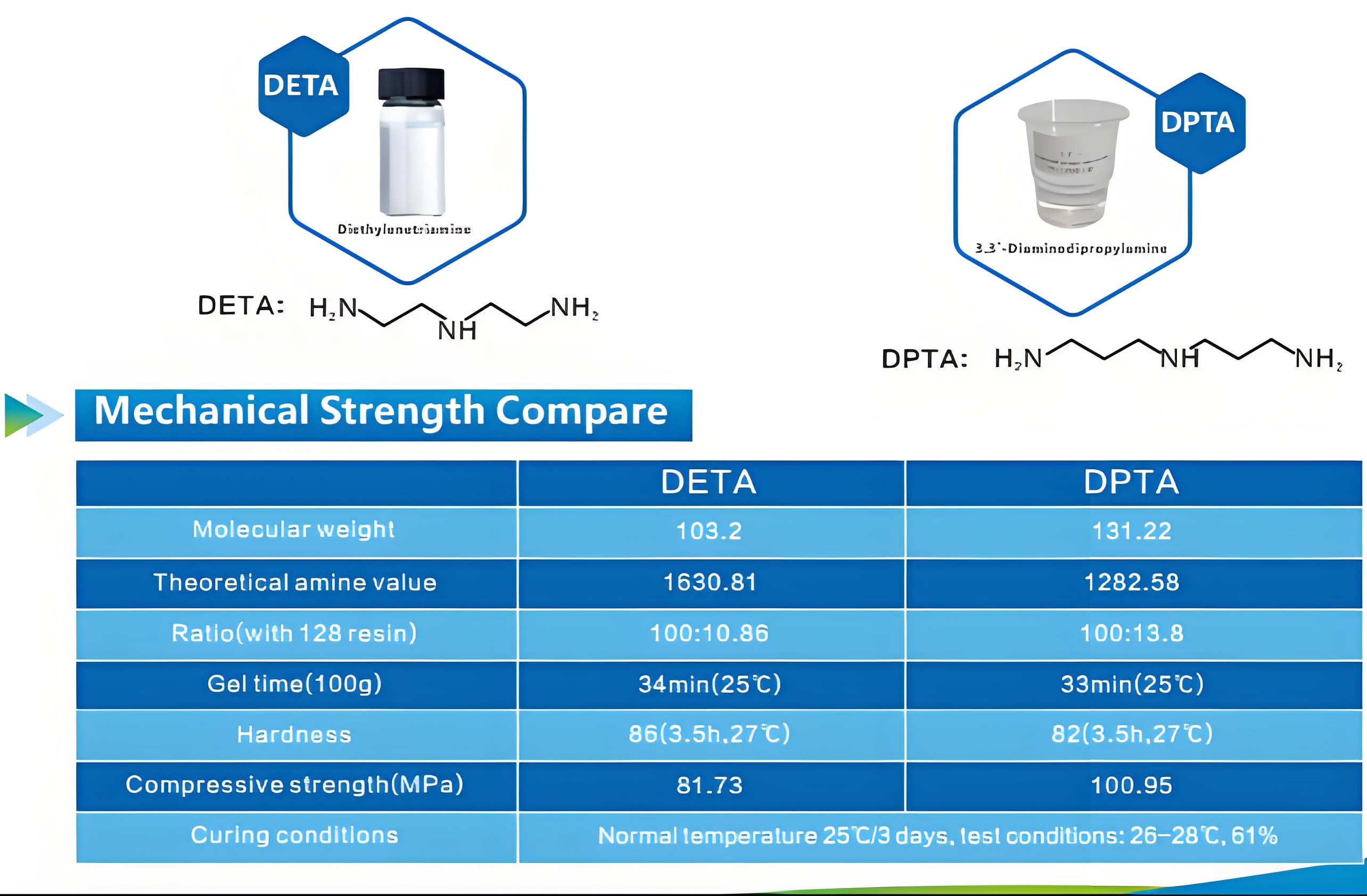
Sammendrag for kjøpere
| Beslutningsfaktor | Detaljert | DPTA | Innkjøpshandlinger |
|---|---|---|---|
| Kjemisk navn | Dietylenetriamin | 3,3-Diaminodipropylamin | Bekreft på sikkerhetsdatablad (SDS) og innkjøpsordre |
| Molekylformel | C4H13N3 | C6H17N3 | Sammenlign med analyseattest (COA) |
| Molekylvekt | 103.2 | 131.22 | Ikke bruke som direkte ekvivalensfaktor |
| CAS-nummer | Bekreft med leverandørens sikkerhetsdatablad (SDS) | 56-18-8 | Bekreft importdokumentasjon |
| Ryggmargstruktur | Kortere etylendiamin | Lengre propylenbasert | Vurder formuleringens virkning |
| Levert DPTA-TDS-verdier | Ikke levert for DETA | Gjennomsiktig fargeløs væske; viskositet <15 mPa·s ved 25 °C; aminverdi 1282 ± 20 mg KOH/g; renhet ≥98 %; tetthet 0,92–0,96 g/cm³ ved 25 °C; fuktighet ≤0,5 %; emballasje 190 kg/trommel | Bekreft mot gjeldende partis COA |
| Nøkkel sammenligningsregel | Sammenlign på tekniske verdier | Sammenlign AHEW, aminverdi, viskositet, geltid, eksoterm, herdfart, mekanisk og kjemisk motstand | Kjør prøveforsøk før utskifting |
Kjøpers innspill: DPTA er ikke en direkte erstatning for DETA. TDS-verdier er kun nyttige etter bekreftelse mot gjeldende batch COA og validering i målformuleringen. Be alltid om tilsvarende DETA-datasett før du tar beslutning.
Strukturelle og spesifikasjonsmessige forskjeller
Lengden på ryggraden, ikke bare molekylvekten, er den viktigste strukturelle variabelen som skal vurderes. DETA’s kortere etylenamin-kjede plasserer reaktive aminogrupper nærmere hverandre enn DPTA’s lengre propylenbaserte kjede. Denne avstanden påvirker direkte støkiometrien og dannelse av tverrlenkingsnettverket.
DETA er en mye brukt alifatisk primæramin kjent for rask herding ved romtemperatur, svært høy eksoterm og lavere motstand ved økte temperaturer. Ved herding av epoksy skiller nukleofil reaktivitet mellom alifatiske, sykloalifatiske og aromatiske aminer.
DPTA er en alifatisk amin med en lengre propylenbasert struktur. Bekreft med leverandøren din hvordan denne strukturelle forskjellen påvirker geleringstid, maksimal eksoterm, herdingshastighet og fleksibilitet i det herdede nettverket i ditt spesifikke epoksysystem. Siden epoksyharer varierer fra lavviskøse væsker til faste grader, er formuleringsmiljøet like viktig som valget av amin.
Ekvivalentvekt for aktive hydrogenatomer (AHEW) fungerer som den praktiske sammenligningsmetrikken. Hardenermengden må strengt følge støkiometrisk balanse, ikke en 1:1-vektsubstitusjon. Alifatiske aminsystemer uten tertiære aminer lastes vanligvis nær teoretisk støkiometri, mens systemer som inneholder tertiære aminer kan justeres ned under denne grunnlinjen.
Spesifikasjonsdata og COA-prioriteringer
| DPTA-parameter | Oppgitt TDS-verdi | Hvorfor det er viktig |
|---|---|---|
| Utseende | Transparent fargetløs væske | Rask visuell sjekk for forurensning eller oksidasjon |
| Viskositet | <15 mPa·s ved 25 °C | Påvirker blanding, våting og håndtering; sammenlign med DETA COA |
| Aminverdi | 1282 ± 20 mgKOH/g | Kjerne reaktivitetsindikator; batchens analyseprotokoll (COA) må bekrefte dette |
| Renhet | ≥98% | Urenhetsprofilen kan påvirke fargen og føre til uønskede sidereaksjoner |
| Tetthet | 0,92–0,96 g/cm³ ved 25 °C | Viktig for omregning mellom volum og vekt samt bekreftelse av trommelinnhold |
| Fuktnivå | ≤0.5% | For mye fuktighet kan svekke herdningskvaliteten og overflatefinishen |
| Emballasje | 190 kg/drum | Bekreft tromlematerialet, belegget og etiketteringen per batch |
For DETA må ekvivalente verdier forespørres via gjeldende batchanalyseprotokoll (COA). Sammenlign utseende, viskositet, aminverdi, renhet, tetthet, fuktighet og emballasje direkte mot DPTA-teknisk datablad (TDS). Et generelt produktdatablad er ikke en garanti for batchen; lotspesifikke COA-er styrer godkjenning av innkomne materialer.
Ytelsesvariabler som betyr noe ved herding av epoksy
Pris per kilogram indikerer ikke herdeytelse. Vurder disse seks variablene:
-
Ekvivalentvekt for aktive hydrogenatomer (AHEW) og støkiometrisk belastning
-
Blandet viskositet og brytbarhetstid
-
Gel tid ved omgivelsestemperatur og økte temperaturer
-
Maksimal eksoterm under herding
-
Herdefart og gjennomherdingshastighet
-
Endelige mekaniske egenskaper og kjemisk motstand
Alifatiske primære aminer gir rask herding ved romtemperatur, men de genererer betydelig varme og gir korte brytbarhetstider. Den lengre propylenbaserte strukturen i DPTA kan endre geleringstiden, redusere maksimal varmeutvikling noe eller justere nettverkets fleksibilitet. Ettersom sammenlignende herdedata avhenger av det nøyaktige epoksirensystemet, må alltid laboratorieforsøk utføres under produksjonsforhold.
Videre avhenger endelige polymersegenskaper sterkt av den valgte grunnleggende epoksirensinen (f.eks. bisfenol-A, bisfenol-F eller novolak-typer). Sammenligninger av aminer må utføres som en del av en helhetlig formuleringsevaluering, ikke som en isolert utveksling av materiale.
Bruksområde som passer for DETA og DPTA
-
DETA-bruksområder: Brukes ofte i epoksyherdemedler, syntese av polyamidharer, lim, og våtstyrkeadditiver i papirproduksjon. Den raska reaktiviteten gjør den egnet for herdesystemer ved romtemperatur der høg eksoterm kan håndterast.
-
DPTA-bruksområder: Rekkjer frå epoksyherdemedler, produksjon av polyamidharer, syntetiske biosorpsjons- og separasjonsmaterialar, kjemikalier for vannrensing, papirtilsetningar, fargestoff/gummimellomprodukt og emulgatorar.
Selv om begge tilhøyrer gruppa av alifatiske aminer, endrar den utvida propylenryggraden handteringa, reaktiviteten og mekaniske fleksibiliteten. Prøvetesting er naudsynt før DPTA vert spesifisert i eksisterande DETA-formuleringar.
Innkjøp og RFQ-sjekkliste
Før du vurderer DPTA som ein alternativ til DETA, må du be leverandørane om følgjande:
-
Sikkerheitsdatablad (SDS) i samsvar med regionale forskrifter
-
Analyseattest (COA) for den aktuelle produktbatchen
-
Teknisk dataark (TDS)
-
Målt AHEW, aminverdi, viskositet, geleringstid og eksotermprofiler
-
Emballasjespesifikasjoner (tønnkonstruksjon, indre belegg, nettovekt)
-
Laboratorieprøve for laboratorie- og pilotvalidering
-
Lagringsanbefalinger og stabilitetsdata for holdbarhet
-
Gyldig toll- og importgodkjenningsdokumentasjon
Ofte stilte spørsmål
Er DPTA en direkte erstatning for DETA i epoksyherdeformuleringer? Nei. DETA (molekylformel C4H13N3, MW 103,2) og DPTA (molekylformel C6H17N3, MW 131,22, CAS-nr. 56-18-8) har ulik ryggradslengde og ekvivalentvekter. Erstatning krever ny vurdering av støkiometrisk belastning, geleringstid, eksoterm og herdede mekaniske egenskaper.
Hvilke DPTA-spesifikasjonsverdier bør kjøpere sjekke først? Nøkkelparametre inkluderer aminverdi (1282 ± 20 mgKOH/g), renhet (≥98 %), viskositet (<15 mPa·s ved 25 °C), fuktinnhold (≤0,5 %), tetthet (0,92–0,96 g/cm³) og utseende. Disse bør verifiseres mot lotspesifikke COA-er.
Hva er den primære formuleringrisikoen ved bytte fra DETA til DPTA? Den viktigste risikoen er å erstatte på 1:1-vektbasis uten å beregne om støkiometriske forhold basert på AHEW. Feilaktige forhold fører til ufullstendig nettverkskryssbinding, endret potliv, utkrystallisering av ureagerte aminer eller svekket kjemisk motstandsdyktighet.
Krever DETA og DPTA samme støkiometriske belastning? Nei. På grunn av forskjeller i molekylvekt og avstand mellom aktive aminhydrogenatomer, varierer ekvivalentvektene for aktive hydrogenatomer. Hardener-phr (del per hundre harpiks) må beregnes på nytt for den spesifikke epoksyharpiksen som brukes.
Hvilke anvendelser profitterer mest av DPTA?