 EN
EN

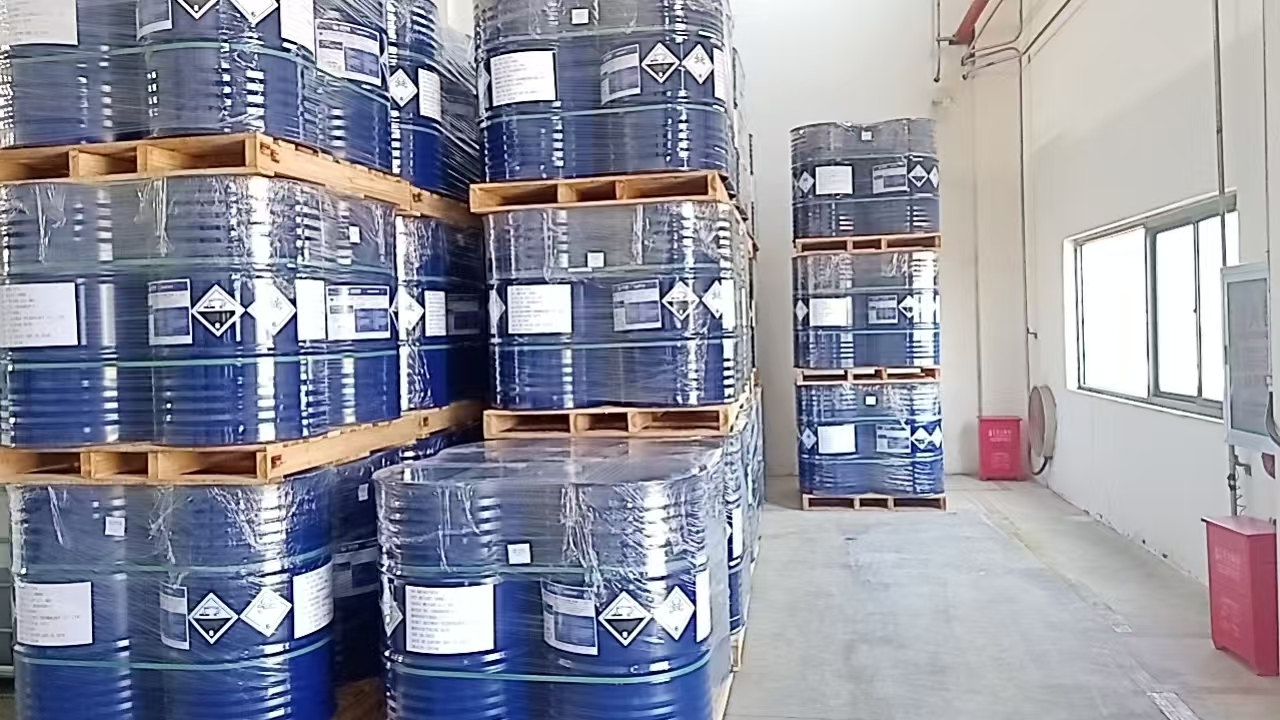
This guide separates what the supplied source evidence supports from what procurement and process teams must obtain through supplier TDS/SDS documents and site-specific laboratory flotation tests.
Key points for buyers:
-
Alkyl ether amines and alkyl ether diamines are established collectors for silicate removal in reverse froth flotation of iron ore.
-
Ether amines act as quartz collectors and also contribute frothing behavior in cationic reverse flotation.
-
Ether amine collectors are used globally for silicate rejection in iron ore processing, including processing of more than 80 million tons of iron ore concentrate in Brazil.
-
The supplied source set does not include a specific commercial grade, CAS number, molecular formula, dosage rate, SiO₂ removal percentage, Fe recovery value, or matched ether amine versus tallow amine test. Those values must come from supplier documentation and bench tests.
-
Do not accept a single generic ether amine CAS as a substitute for grade-specific chemical identity.
First RFQ Data: Product Identification Table
No supplier catalogue is present in the supplied evidence. Therefore, this article does not assign a brand name, CAS number, or molecular formula to a traded product. Those are exactly the fields a buyer should require from the supplier before comparing performance.
| RFQ parameter | What to request | Source/status |
|---|---|---|
| Commercial grade | Exact supplier product name and product code | Supplier to state; no catalogue supplied |
| CAS registry number | Grade-specific CAS for the actual alkyl ether amine or alkyl ether diamine product | Confirm with supplier; do not accept one generic CAS for all ether amines |
| Molecular class | Alkyl ether amine, alkyl ether diamine, or related ether-functionalized surfactant | |
| Composition range | Alkyl chain length, ether linkage, degree of alkoxylation, active matter, solvent/water content | Supplier to state; verify the actual structure rather than inferring it from the product family |
| Physical/chemical specification | Active content, pH, water content, freezing point, solvent, packaging, shelf life | Request TDS/SDS; not supplied in source evidence |
| Flotation test context | Ore sample, pH, collector concentration, water hardness, flotation flow sheet | Required for any benchmark |
The supplied source describes the ether group as a polyoxyethylene chain. In commercial iron-ore collectors, however, the actual product may instead be an alkoxypropyl amine or diamine with a single ether linkage, or it may contain a limited degree of alkoxylation. Buyers should therefore verify the molecular structure, degree of alkoxylation, carbon-chain distribution, and active content directly with the manufacturer. These variables can change collecting strength, water dispersibility, and froth behavior.
1. Cationic Ether Amine Collector for Silica Reverse Flotation in Iron Ore
Ether amines have become a significant class of cationic collectors in mineral processing because of their efficiency and selectivity in flotation applications. In iron ore reverse flotation, the target is quartz and other silicate gangue. The ether amine collector attaches to the quartz surface, the quartz reports to the froth, and the iron minerals remain in the cell as the concentrate stream.
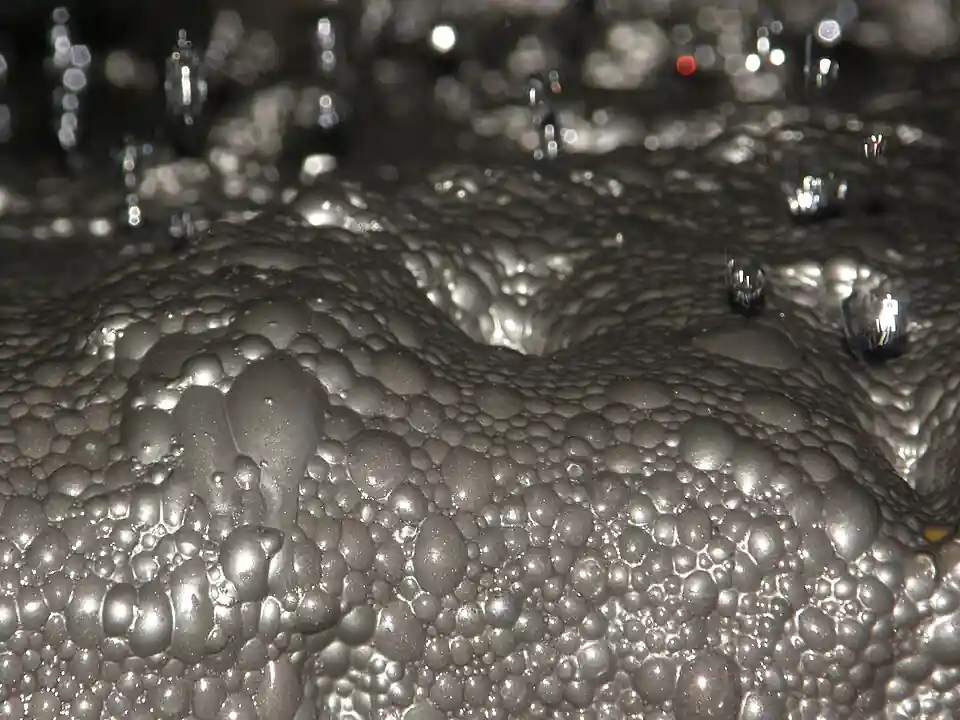
The source evidence also shows a critical point for plant engineers: etheramines are not only quartz collectors. They also act as frothers in cationic reverse flotation of iron ores. While quartz adsorption has been widely studied, the effect of ether amine foam and froth properties on flotation selectivity has not been addressed in detail. Buyers should therefore treat froth behavior as a separate evaluation item, not as a minor side property.
Ether amine collectors are already used at industrial scale. The generated amine-silicate species are sufficiently surface-active to promote silicate flotation separation, and ether amine collectors are used globally for silicate rejection in iron ore processing plants. The Brazilian iron ore industry alone processes more than 80 million tons of iron ore concentrate where these collectors are part of the silicate rejection route.
The application is well established for silicates in iron ores, particularly magnetite systems, but the same source evidence notes that ether amine application in carbonate–silicate systems, especially magnesite, has not been extensively studied. A buyer should not assume that a collector proven on quartz-rich iron ore will transfer directly to a carbonate-bearing ore without testing.
What should a buyer specify in an RFQ for a cationic ether amine collector?
Request at least the following:
-
Exact product name and product code.
-
Grade-specific CAS number and molecular identity.
-
Whether the product is an alkyl ether amine, alkyl ether diamine, or another ether-functionalized surfactant.
-
Active content, solvent, water content, and neutralization form.
-
Packaging, freezing point, storage limits, and shelf life.
-
A current TDS and SDS.
-
A 1–5 kg laboratory sample for bench flotation.
-
A written supply confirmation for the exact grade quoted.
Do not base a supplier decision on a general statement that the product is “an ether amine for iron ore.” That does not define the chemical product you will receive.
Why can the same cationic ether amine chemistry perform differently in different plants?
Because ether amines contribute to both collection and froth phase behavior. Selectivity can change with water chemistry, cell type, and reagent addition point. Industrial sampling in the Samarco flotation circuit has included water and pulp samples from mechanical cells, tank cells, and flotation columns, showing that process location and water source are part of the evaluation. A collector that works in one cell configuration may need different dosage or froth management in another.
2. Ether Amine Dosage for Iron Ore Reverse Flotation
The supplied source evidence includes a laboratory procedure for reverse cationic flotation of iron ore using an ether amine collector. The baseline ore preparation is:
-
Crush and grind the iron ore to a target particle size, typically 80% passing 150 micrometers.
-
Prepare a representative sample of the ground ore, for example 1000 g.
-
Place the ground ore into a laboratory flotation cell, such as a Denver-type cell.
The source extract does not state a universal ether amine dosage rate. That is expected: dosage depends on ore mineralogy, feed SiO₂, particle size distribution, water hardness, starch depressant type and dose, pH, and flotation time. A supplier cannot credibly quote a single plant dosage without testing the ore.
For procurement comparison, dosage should be evaluated as grams of active collector per tonne of ore. If two suppliers quote as-supplied liquid dosage, normalize to active matter. Otherwise water or solvent content creates a false efficiency comparison.
Ether amine dose-response test plan
| Test item | Fixed or recorded condition | Result to record |
|---|---|---|
| Ore sample ID | Same ore lot for all collectors | Feed Fe and SiO₂ |
| Grind target | 80% passing 150 µm | Measured P80 |
| Flotation cell | Denver-type or equivalent | Cell volume and rotor speed |
| pH | Record and hold constant | pH before collector and after conditioning |
| Starch/depressant | Record type and dose | Concentrate SiO₂ |
| Water hardness | Record Ca/Mg hardness | Fe recovery |
| Collector dosage | Test 0.5×, 1×, and 2× current active dose | Mass pull, froth height, froth collapse time |
| Air rate and flotation time | Record | Concentrate SiO₂ and Fe recovery |
The comparison is valid only when the same ore sample and same flotation conditions are used for both products.
How should dosage be expressed in supplier comparisons?
Request dosage on an active ingredient basis. For example, compare grams of active collector per tonne, not milliliters of diluted product. Also ask for active content, solvent type, and recommended dilution. This prevents overestimating the performance of a diluted product or underestimating a more concentrated one.
What lab conditions must be fixed before comparing dosage claims?
Fix the grind P80, ore lot, pulp density, pH, depressant type and dose, water chemistry, flotation time, air rate, and cell geometry. The baseline laboratory procedure starts with P80 at 150 µm and a representative 1000 g sample in a Denver-type cell. If one test uses plant reclaim water and another uses tap water, the dosage comparison is not reliable, especially because water chemistry in flotation circuits can differ by sampling point.
3. Silica Removal Efficiency with Ether Amine Collectors
Silica removal efficiency is not a fixed property of the ether amine chemical class. It is a process result produced by the interaction of collector, ore surface, water chemistry, depressant, and flotation cell operation.
The supplied source evidence does not contain a product-specific SiO₂ removal percentage or Fe recovery value. Therefore, this article does not state a universal “high efficiency” number. A buyer should treat any supplier catalogue efficiency claim as unverified until it is reproduced on the buyer’s ore sample.
Industrial experience referenced in the source set shows that ether amine collectors are used globally for silicate rejection in iron ore processing plants, with large-scale use in Brazilian concentrators. However, that establishes industrial adoption, not a guarantee of site-specific silica removal.
What causes silica removal efficiency to fall during scale-up?
The source evidence points to several process factors to check:
-
Froth properties: Ether amines also act as frothers, so froth stability and selectivity can change with dosage and water chemistry.
-
Cell configuration: Industrial sampling has been conducted across mechanical cells, tank cells, and flotation columns. Efficiency is not identical across cell types.
-
Water chemistry: Water samples from different points in an iron ore flotation circuit can differ in composition. Reclaim water and tailings water may affect selectivity.
-
Feed size deviation: If the plant grind is coarser or finer than the laboratory P80 of 150 µm, collector dosage and recovery can shift.
A drop in SiO₂ removal should not automatically be solved by adding more collector. Overdosing can change froth behavior and reduce selectivity, especially because ether amines have frother function.
What should be measured in a silica removal efficiency trial?
Record feed SiO₂, feed Fe, concentrate SiO₂, concentrate Fe, Fe recovery, mass pull, collector active dosage, pH, water hardness, froth height, froth water content, and flotation time. A before/after comparison on the same ore is more useful than an isolated silica rejection percentage.
4. Ether Amine Versus Tallow Amine for Iron Ore Flotation
The available source material does not contain a matched laboratory or plant comparison between ether amine and tallow amine collectors. No comparative dosage, SiO₂ grade, Fe recovery, or froth performance values are available. Therefore, no ether amine versus tallow amine performance advantage is claimed in this article.
Alkyl ether amines and alkyl ether diamines are established collector families for reverse froth flotation of iron ore. Their detailed structures should not be reduced to a generic polyoxyethylene-chain description without grade-specific confirmation. A comparison against tallow amine must be generated on the same ore sample.
Ether amine versus tallow amine matched-flotation test plan
Because no matched test values are present in the source set, use the following blank test plan. Do not treat it as performance evidence.
| Test item | Ether amine candidate | Tallow amine reference | Result to record |
|---|---|---|---|
| Commercial grade and CAS | Supplier to state | Supplier to state | Product identity |
| Ore sample ID | Same ore | Same ore | Feed Fe and SiO₂ |
| P80 | 80% passing 150 µm | 80% passing 150 µm | Measured P80 |
| pH | Record | Record | pH before/after conditioning |
| Depressant type and dose | Record | Record | Concentrate SiO₂ |
| Collector active dosage | Record g/t active | Record g/t active | Fe recovery |
| Water hardness | Record | Record | Mass pull |
| Froth height and collapse | Record | Record | Froth stability/selectivity |
The table is a framework for an actual trial, not a source-based result. Plant results may differ from bench results, and a single batch test is not a full-scale qualification.
Should a plant switch from tallow amine to ether amine based on a supplier data sheet?
No. A data sheet can confirm product identity and specification, but it cannot prove selectivity on the buyer’s ore. The source evidence supports that ether amines are quartz collectors and frothers, but it does not provide a tallow amine comparison. Run a matched bench flotation test with the current tallow amine reference and the ether amine candidate using identical grind, water, pH, depressant, and cell conditions. Then evaluate the SiO₂ grade, Fe recovery, and froth behavior together.
What field data should be collected during a plant trial?
For a plant trial, record feed SiO₂ and Fe, concentrate SiO₂ and Fe, Fe recovery, active collector consumption, depressant consumption, froth depth, froth water carryover, filtration behavior, and any changes in water chemistry across the circuit. Use the same sampling discipline referenced for mechanical cells, tank cells, and flotation columns.
Request TDS, SDS, and Laboratory Samples
To evaluate cationic ether amine collectors for your iron ore silica reverse flotation circuit, request the following from the supplier:
-
Current TDS and SDS for the exact quoted grade.
-
Grade-specific CAS number and molecular composition range.
-
Active matter, solvent, pH, and storage data.
-
A 1–5 kg laboratory sample for bench flotation.
-
A written RFQ with dosage on active basis and recommended conditioning conditions.
-
A site-trial protocol based on the flotation procedure starting at 80% passing 150 µm and a representative laboratory feed.
Send the supplier your ore head grade, target concentrate SiO₂, current collector type and dosage, starch/depressant program, plant water analysis, and flotation flow sheet. Ask them to run a matched test against your current collector before industrial scale-up.
Note:
Table of Contents
- First RFQ Data: Product Identification Table
- 1. Cationic Ether Amine Collector for Silica Reverse Flotation in Iron Ore
- 2. Ether Amine Dosage for Iron Ore Reverse Flotation
- 3. Silica Removal Efficiency with Ether Amine Collectors
- 4. Ether Amine Versus Tallow Amine for Iron Ore Flotation
- Request TDS, SDS, and Laboratory Samples