 EN
EN

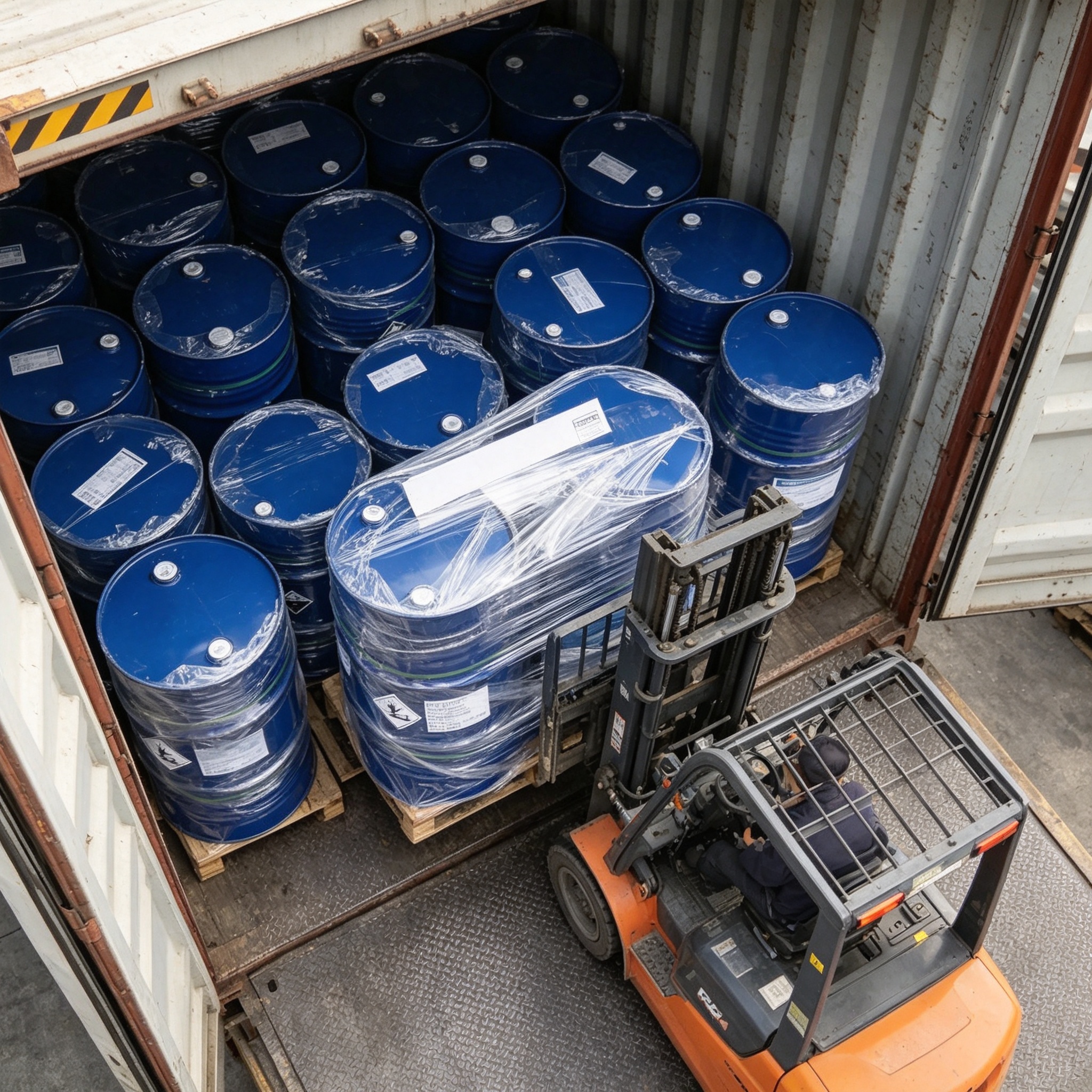
Do not transfer data from 2-ethylhexylamine or other ether amines directly to isodecyloxypropylamine. The available technical material for 2-ethylhexylamine notes limited direct data and uses analogous branched and straight-chain amines only as a comparative baseline. Likewise, cationic amine collectors are known to work through hydrophobization of silicate or phosphate surfaces, but effectiveness depends on molecular structure, pulp pH and collector concentration.
Key takeaway for procurement and process engineers
Use a staged evaluation: confirm identity first, then neat-product cold flowability, dilution stability in plant water, and flotation recovery with your ore. The highly branched C10 group generally disrupts molecular packing and helps the neat material remain fluid at low temperature. In service, the more relevant risks are often gelling, phase separation, or mineral-salt precipitation after dilution rather than crystallization of the neat collector. Any comparative low-temperature claim still requires measured product-specific results.
| Finding | Source or evidence | Action |
|---|---|---|
| Isodecyloxypropylamine identity: CAS, molecular formula, isomer composition | Current supplier SDS and TDS | Confirm before issuing a purchase order |
| Neat cold viscosity | Laboratory measurement at target temperature range | Compare only with same test method |
| Dilution behavior in plant water | Cold dilution stability test | Require results before large-scale trial |
| Flotation recovery in target ore | Bench or pilot flotation test | Use actual ore type and water chemistry |
| Dosing-line simulation | Cold static/flow test with diluted product and plant water | Identify gelling, phase separation, salt precipitation, or flow restriction |
No supplier catalogue was supplied in the source set for this product. Treat all specification values as supplier data that must be checked against the SDS, batch CoA and independent testing.
3-(isodecyloxy)propylamine collector performance in low-temperature flotation
Amine-based collectors can be effective for reverse flotation of silicates from iron ore or for apatite-quartz separation, but the result is not guaranteed by the chemical family alone. For low-temperature circuits, you need product-specific performance data.
Because direct quantitative performance data for isodecyloxypropylamine are not included in the supplied sources, use the following flotation test plan as your comparison framework. The test should fix mineralogy, grind size, water chemistry, pH, depressant dosage, frother and conditioning time before comparing suppliers.
| Flotation test item | Specification to fix | Recommended metric / what to record |
|---|---|---|
| Ore type | Feed mineralogy and origin | Detailed mineralogical composition, source mine, and sample ID |
| Feed grade | Target mineral assay | Baseline assay, including Fe, SiO₂, P₂O₅, or other relevant components |
| Grind P80 | Target particle size in µm | Screen or laser-size verification of the actual P80; record the full size distribution where possible |
| Pulp pH | Target value ±0.1 | pH before conditioning and after collector addition |
| Collector dosage | g/t dry feed on an active basis | Test a dose-response series around the current plant baseline, such as 0.5×, 1×, and 2× |
| Depressant | Type and dosage | Product identity, active dosage, preparation method, and conditioning time |
| Frother | Type and dosage | Added frother dosage, or state clearly when the ether amine provides the frothing function |
| Conditioning time | Fixed minutes before flotation | Actual conditioning time and sequence of reagent addition |
| Flotation temperature | Defined low-temperature range | Measured slurry temperature throughout conditioning and flotation; a 10–15°C range may be used only when it matches the site scenario |
| Concentrate grade | Target grade or penalty limit | Final concentrate assay compared with the contractual or plant specification |
| Recovery | Metallurgical balance | Calculated target-mineral recovery with the mass-balance method stated |
| Tailings loss | Target mineral in tailings | Tailings assay and calculated valuable-mineral loss |
To demonstrate what a rigorous low-temperature test protocol should report, consider a published evaluation of a benchmark low-temperature collector identified only as collector DZ. A mixed magnetic concentrate with a TFe grade of 53.92% was tested at 15±2°C, pulp pH 9, starch dosage 750 g/t, collector dosage 150 g/t, and no activator. The study varied collector dosage, pulp pH, temperature, starch dosage, and CaO dosage.
Collector DZ was not identified as isodecyloxypropylamine, so its result is not performance evidence for this product. Use the study only as a methodology template for the fields a supplier should report: collector identity, ore type and grade, temperature, pH, dosage, depressant program, concentrate quality, and recovery.
Which flotation variables should be fixed before comparing suppliers?
Fix the mineral system first. If you compare supplier A on a high-grade hematite ore and supplier B on a low-grade complex magnetite ore, the comparison is not valid. The supplier should report feed grade, grind size, water composition, reagent dosages and conditioning time. If those variables are missing, ask for the laboratory report rather than a summary table.
When can a different ore body result be used as evidence?
Only as a screening indicator. A result from iron ore does not transfer directly to apatite, potash or spodumene systems because collector adsorption, pH response and water chemistry can differ. Use third-party bench tests with your own ore as the final basis for supplier selection.
Low-Temperature Flowability of Ether Amine Flotation Reagents
Low-temperature flowability is not the same as flotation performance. An ether amine may still flow at 5°C but fail to disperse sufficiently in the flotation cell. A low pour point does not replace viscosity, cloud point or dilution testing.
Build a temperature-viscosity table before comparing suppliers. Measure the neat product at fixed temperatures and record appearance, viscosity, flow behavior, and any phase separation. Branching can reduce molecular packing compared with a straight-chain analogue, but it does not justify assigning a specific pour point or viscosity curve without grade- and batch-specific data.
| Temperature (°C) | Recommended appearance check | Recommended viscosity / flow metric | Test method to report | Qualification note |
|---|---|---|---|---|
| 25 | Color, clarity, suspended matter, and phase uniformity | Measured dynamic viscosity in mPa·s | Validated rotational-viscometer method, with instrument, spindle, and speed stated | Establish the batch baseline |
| 20 | Compare with the 25°C reference | Measured viscosity and percentage change from baseline | Use the same geometry and a defined equilibration time | Investigate unexpected haze or discontinuity |
| 15 | Record clarity, haze, sediment, or separate phase | Measured viscosity and pour/flow observation | Report temperature tolerance and equilibration time | Must remain pumpable for the intended system |
| 10 | Record uniformity after cold hold | Measured viscosity and flow time, if used | Keep the method consistent across suppliers | Compare with the site's winter operating limit |
| 5 | Check for gel, phase separation, solids, or loss of flow | Measured viscosity where the method remains valid; otherwise report a defined flow test | State any spindle or speed change and do not compare unlike methods directly | Acceptance limit must come from pump and line capability |
| 0 | Check for gel, phase separation, solids, or loss of flow | Measured viscosity or defined low-temperature flow result | Record cold-hold duration before measurement | Use only if 0°C is relevant to storage or dosing conditions |
No universal viscosity values or pass/fail limits are assigned here. Populate this table with supplier CoA data or measurements from the actual offered batch.
Use one agreed test method for all suppliers. If supplier A reports Brookfield viscosity at one spindle/speed and supplier B reports a different method, the numbers cannot be compared directly. Record the method, spindle, shear rate, sample temperature and equilibration time.
Also request the supplier SDS or TDS for cloud point, pour point and any cold-storage recommendation. If the value is not present, ask for the batch CoA and confirm whether the test was performed on the current production lot.
Does a lower pour point prove better low-temperature flotation?
No. Pour point shows whether the neat liquid remains fluid, not whether the diluted collector remains dispersed in cold process water or whether it floats the target mineral. A product can have acceptable neat flowability but still precipitate, gel or lose recovery when diluted at low temperature. Require both flowability and flotation results.
Ether Amine Dilution and Dispersion in Cold Process Water
In many plants, the collector is diluted with process water before dosing. Cold process water can change dispersion more than ambient laboratory water. Salts, hardness ions, fine solids and pH can produce turbidity, deposit formation or gel-like phase separation.
Prepare a dilution stability test using the actual plant water you will use in production. Do not rely on demineralized water unless that is your actual process water.
| Test condition | Variable to fix or record | Recommended metric / qualification note |
|---|---|---|
| Collector lot / batch | Supplier, grade, batch number, and free-amine or supplied-salt form | Link every result to the tested lot |
| Dilution ratio | % w/w collector on an active basis | Test the planned plant concentration plus a lower and higher concentration where practical |
| Water source | Plant location, sampling point, and date | Use the actual dilution water; retain a water sample for repeat testing |
| Water chemistry | Hardness, conductivity, major ions, suspended solids, and alkalinity | Report measured values rather than assigning a generic hardness range |
| Water temperature | Actual and target °C | Test at the lowest credible process-water temperature and at a normal-operation reference temperature |
| Neutralization degree | Acid identity and molar ratio to amine | State whether neutralization occurred before supply or during plant preparation; partial acetic-acid neutralization is common in iron-ore ether-amine practice |
| Mixing order | Collector into water or water into collector | Test the intended plant sequence and note globule or gel formation |
| Mixing energy | Mixer type, speed, power where available, and time | Use a reproducible method that can be related to plant mixing capability |
| pH before dilution | Raw-water pH and neat-product or concentrate pH | Record both values with the measurement temperature |
| pH after dilution | Diluted reagent pH | Measure immediately and after the defined hold period |
| Appearance at t=0 | Clarity, haze, gel, particles, foam, or separate phase | Record photographs under consistent lighting |
| Appearance at 1 h | Same observation set | No hard gel or non-redispersible deposit under the proposed conditions |
| Appearance at 4 h | Same observation set | Quantify any sediment, cream layer, or phase boundary |
| Appearance at 24 h | Same observation set | Record redispersibility and wall deposits as well as bulk appearance |
| Phase separation | Layer height or volume percentage | Set the acceptance limit from dosing consistency and plant tolerance; do not label an arbitrary value as universal |
The mixing order matters. Some ether amine formulations disperse more readily when added to water under constant stirring, while others can form sticky globules if water is added to the amine. Test both orders and record the difference.
How do I test dilution dispersion with actual plant water?
Take a representative water sample from the process line at the point where the collector will be diluted. Measure pH, conductivity, hardness ions and suspended solids before the test. Prepare dilutions at the same concentration planned in the plant—commonly 1%, 2% or 5% w/w—and hold them at the lowest expected process temperature for 24 hours. Record visual clarity, turbidity, pH and any deposit on the vessel wall.
Preventing Gelling and Phase Separation in Flotation Collector Dosing Lines
With highly branched isodecyloxypropylamine, low-temperature dosing problems should not automatically be described as neat-product crystallization. Field restrictions more often arise after dilution, when hard-water ions, local pH, incomplete neutralization, or poor mixing can cause gelling, emulsion separation, or mineral-salt precipitation. Unheated transfer lines, dead legs, and dilution-point design can aggravate these failures. A product that passes a simple beaker test can still restrict flow after remaining static in a dosing line for several hours.
Use a dosing-line simulation before industrial scale-up. Place the diluted collector in a coil or narrow tube, hold it at the target low temperature for 8–24 hours, then measure pressure drop, visual appearance and time to restore stable flow.
| Line simulation item | Test condition to define | Recommended metric / qualification note |
|---|---|---|
| Line inner diameter | Match the plant tube or test more than one candidate diameter | Record the actual internal diameter; do not infer it from nominal outside diameter |
| Line material | Match the intended HDPE, stainless steel, or other wetted material | Record the full pipe specification and inspect for wall deposits |
| Dilution ratio | Planned % w/w on an active basis | Include the normal concentration and a credible worst-case concentration |
| Water type | Actual plant process or reclaim water | Record hardness, conductivity, pH, suspended solids, and sampling point |
| Hold temperature | Lowest credible line temperature | Verify temperature along the test section rather than only in the surrounding chamber |
| Static hold time | Expected maximum stagnant period | An overnight 8–24 h hold can be a screening condition when it represents plant operation |
| Pressure drop before/after | Differential pressure at the same controlled flow rate | Set the allowable increase from the pump curve, line design, and baseline repeatability; a fixed 0.2 bar limit is not universal |
| Visual inspection | Gel, solid, separate phase, sediment, or wall film | Qualify only when no flow-restricting plug or persistent deposit is present |
| Flow recovery after restart | Time and pressure trend to reach the baseline flow | Define acceptance from the actual dosing-control response; a universal five-second limit is not supported |
Values such as a 12 mm line, 5°C hold, 12 h residence time, or 2.5 bar operating pressure may be used as proposed test settings only when they match the plant design. They are not intrinsic properties of isodecyloxypropylamine.
What should I require in an RFQ before accepting a low-temperature claim?
Require the following from each supplier:
-
Current SDS with Section 1 and Section 3 chemical identity
-
TDS with density, amine value, moisture, pour point, cloud point and viscosity method
-
Batch CoA matching the offered lot
-
Cold viscosity or flowability data at 5°C, 10°C or 15°C
-
Dilution stability data in process water
-
Bench flotation data with stated ore type, grade, pH, collector dosage and temperature
-
A site trial proposal with agreed acceptance criteria
If the supplier uses the phrase “low temperature” without defining the temperature or test method, ask for a written clarification.
Main request before purchase
Request the current TDS/SDS, batch CoA for the offered lot, and a small laboratory sample. Run the identity check, cold viscosity, dilution stability and flotation recovery test using your ore and your plant water. Then run a dosing-line simulation before committing to an industrial trial. This is the only way to compare suppliers without accepting marketing language in place of data.
Note: The data above are based on the stated ore samples and laboratory conditions. Plant results may vary with mineralogy, water chemistry and process settings. Site trials are recommended before industrial scale-up.
Table of Contents
- 3-(isodecyloxy)propylamine collector performance in low-temperature flotation
- Low-Temperature Flowability of Ether Amine Flotation Reagents
- Ether Amine Dilution and Dispersion in Cold Process Water
- Preventing Gelling and Phase Separation in Flotation Collector Dosing Lines
- Main request before purchase