 EN
EN

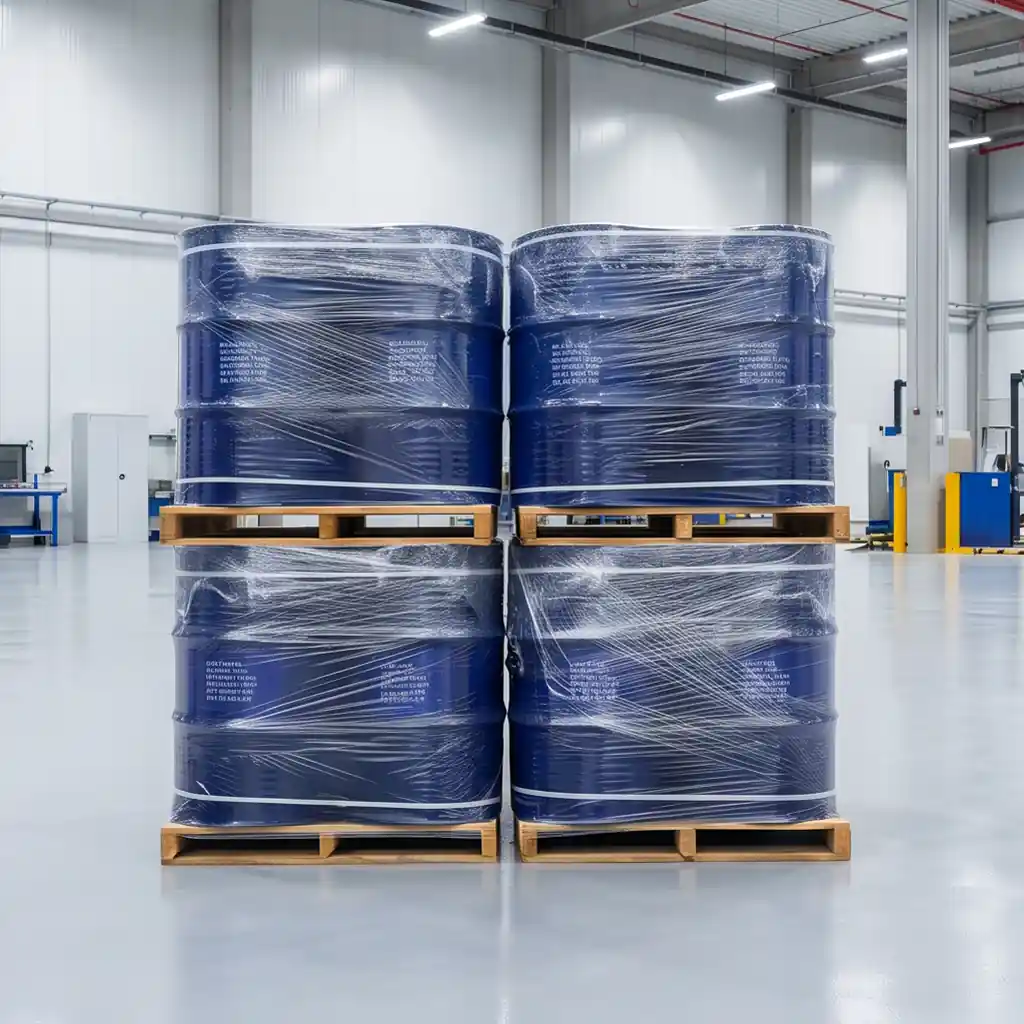
China remains one of the world’s most important epoxy resin markets, supported by a large chemical manufacturing base, established supply chains, and demand from coatings, composites, electronics, construction, and adhesives.
In 2026, the industry is moving from capacity-led expansion toward a more selective market. Competition remains intense in conventional liquid and solid epoxy resins, while electronics, renewable energy, industrial protection, and advanced composites are creating opportunities for products that meet more demanding processing and performance requirements.
Grand View Research estimates that China’s epoxy resin market generated approximately USD 4.38 billion in revenue in 2025 and projects a compound annual growth rate of 3.8% from 2026 to 2033. These are third-party forecasts rather than official statistics, and results may differ by market definition and methodology.
2026 Market Snapshot
| Market Indicator | Latest Available Estimate | What It Means for Buyers |
|---|---|---|
| China epoxy resin market revenue | USD 4.38 billion in 2025 | China remains a major global production and sourcing market. |
| Forecast market growth | 3.8% CAGR, 2026–2033 | Overall growth is moderate, but performance varies by application. |
| Nameplate production capacity | Approximately 3.81 million tonnes/year in 2025 | Conventional grades are available from a broad supplier base. |
| Actual production | Approximately 2.08 million tonnes in 2025 | Implied nameplate capacity utilization was about 54%, based on third-party estimates. |
| Largest application by revenue | Paints and coatings in 2025 | Coatings remain central to market demand. |
| Key opportunity areas | Electronics, wind energy, industrial protection, composites, and specialty adhesives | Technical qualification and application support matter more in these segments. |
The utilization figure is calculated from the cited capacity and output estimates. Nameplate capacity is not the same as effective supply, and the figures should not be interpreted as proof that every grade is oversupplied.
For manufacturers, distributors, and international buyers, the practical question is no longer simply how much resin China can produce. It is which suppliers can deliver consistent materials, suitable documentation, technical support, and reliable export service for a specific application.
2. Supply and Demand: Broad Capacity, Uneven Availability
Industry estimates place China’s 2025 epoxy resin capacity at approximately 3.81 million tonnes per year and actual production at about 2.08 million tonnes. The gap reflects low utilization across parts of the industry, particularly where conventional grades compete mainly on price.
For buyers, the large production base provides more sourcing options, but low quotations should not be assessed in isolation. Changes in bisphenol A, epichlorohydrin, energy, packaging, and freight costs can affect both price and delivery stability. Batch consistency, specification control, lead time, and the cost of failed production trials may matter more than a small difference in price per tonne.
Supply conditions also vary by grade. Standard bisphenol-A liquid resin may be available from many producers, while low-chlorine, high-purity, low-viscosity, electrical, or composite grades can require tighter process control and customer qualification. Buyers should therefore distinguish between broad nameplate capacity and the effective supply of a product that meets their specifications.
3. Applications Shaping Market Development
3.1 Industrial and Protective Coatings
Epoxy coatings are used on steel structures, industrial equipment, pipelines, tanks, marine facilities, factory floors, and infrastructure. Adhesion, chemical resistance, mechanical performance, and corrosion protection remain the main selection criteria.
Demand opportunities include maintenance coatings, heavy-duty flooring, tank linings, and systems designed for aggressive chemical or environmental exposure. Formulators should select resin and hardener together because curing chemistry affects pot life, hardness development, adhesion, appearance, and chemical resistance.
For standard coating and flooring formulations, buyers can review Hanepoxy’s and confirm the current TDS, COA, and application fit before qualification.
3.2 Wind Energy and Composite Materials
Epoxy systems are used in selected wind turbine blade and structural composite processes where fatigue resistance, mechanical strength, controlled cure, and long-term durability are important. As blade designs and manufacturing processes evolve, suppliers must support processing requirements such as viscosity, infusion behavior, working time, cure profile, and compatibility with reinforcement materials.
The commercial opportunity is therefore application-specific: composite manufacturers need a validated system, not simply a commodity resin. Laboratory screening and production-scale trials remain essential.
3.3 Electronics and Electrical Insulation
Electrical insulation, encapsulation, printed circuit board materials, casting, and selected semiconductor packaging systems may require high purity, low ionic contamination, stable dielectric properties, controlled thermal expansion, and dependable performance under heat and humidity.
These requirements create opportunities beyond standard grades, but they also introduce stricter quality controls and longer approval cycles. Buyers should define test methods and acceptance limits before requesting samples so that supplier data can be compared on the same basis.
3.4 Construction, Flooring, and Industrial Bonding
Construction demand includes industrial flooring, concrete repair, structural bonding, and protective coatings. Growth depends on infrastructure investment, industrial construction, renovation, and maintenance rather than on new property development alone.
Epoxy adhesives are also used in machinery, electrical equipment, transportation, construction, and lightweight structures. Resin type, curing agent, filler package, and application temperature jointly determine working time, cure speed, flexibility, bond strength, and service durability. This makes formulation testing more useful than selecting a product by resin name alone.
4. Epoxy Curing Agents: Matching Chemistry to the Application
Curing agents determine much of the final system’s processing window and performance. No family is universally superior; selection depends on the resin, formulation, substrate, application temperature, cure schedule, and service conditions.
| Curing Agent Type | Key Performance Characteristics | Common Industrial Applications |
|---|---|---|
| Amine and modified amine | Adjustable cure speed, hardness development, adhesion, and chemical resistance; performance varies widely by modification | Industrial coatings, flooring, adhesives, repair compounds |
| Polyamide | Flexibility, substrate wetting, water resistance, and corrosion-protection potential | Marine and structural-steel primers, maintenance coatings, adhesives |
| Cycloaliphatic amine | Good hardness, gloss, chemical resistance, and improved color stability in suitable formulations | Heavy-duty flooring, high-performance coatings, selected electrical applications |
| Anhydride | Suitable thermal performance, dielectric properties, and controlled elevated-temperature cure | Electrical casting, potting, insulation, and composites |
| Application-specific modified hardener | Tailored viscosity, pot life, low-temperature cure, surface tolerance, or handling | Specialty coatings, flooring, adhesives, and repair systems |
The table summarizes typical formulation tendencies, not guaranteed properties. Final performance must be verified in the complete formulation under intended processing and service conditions.
Buyers can compare Hanepoxy’s and as candidate families. Current specifications, recommended mix ratios, and application test results should be reviewed before commercial use.
Sourcing resin and curing agents from a supplier able to discuss stoichiometry, cure conditions, testing, and troubleshooting can reduce avoidable formulation trials. The purpose of technical support is not to replace validation, but to identify more suitable candidates and test conditions earlier.
5. Five Trends Shaping China’s Epoxy Resin Industry
Trend 1: Competition Is Shifting Toward Value and Fit
Conventional grades still face price pressure, but sustainable differentiation increasingly comes from product consistency, processability, documentation, and application fit. Specialty materials can offer better margins only when suppliers can meet qualification requirements and maintain stable production.
Trend 2: Total Purchasing Cost Matters More
Raw material volatility, energy, production efficiency, packaging, and logistics continue to influence quotations. Buyers increasingly evaluate landed cost, storage, rejection risk, technical service, and delivery reliability alongside the quoted resin price.
Trend 3: Specifications Are Becoming More Application-Specific
Formulators may need a defined epoxy equivalent weight, viscosity, hydrolysable chlorine level, color, cure profile, adhesion, or resistance property. Clear application information helps suppliers recommend appropriate candidates and prevents unnecessary sample rounds.
Trend 4: Environmental and Regulatory Requirements Are Expanding
Depending on the application and destination market, customers may prioritize lower solvent content, reduced emissions, process efficiency, and regulatory documentation. Waterborne and high-solids technologies may provide options, but they must still satisfy the required application, cure, and service performance.
Trend 5: Export Sourcing Requires More Risk Control
Tariffs, trade remedies, transport costs, dangerous-goods requirements, and destination-market chemical rules can change landed cost or product availability. Overseas buyers can reduce risk by qualifying alternatives, agreeing on specifications and inspection terms, and confirming documentation before shipment.
6. Main Market Challenges
China’s manufacturing scale does not remove the industry’s structural challenges. Low utilization and aggressive competition can pressure supplier margins. Demand also differs substantially across coatings, construction, wind energy, electronics, and adhesives, so an overall growth forecast may not describe an individual grade.
Feedstock volatility can shorten quotation validity, while specialty applications require tighter quality control and longer approval cycles. International shipments add another layer of complexity through duties, compliance documentation, packaging, and freight.
For suppliers, growth alone does not guarantee profitability. For buyers, a large supplier pool does not guarantee that all offers are technically or commercially equivalent. Both sides benefit from clear specifications, controlled samples, documented test methods, and realistic delivery agreements.
7. How International Buyers Should Qualify Chinese Suppliers
Before placing a commercial order, buyers should:
-
Compare current TDS, SDS, COA format, specification limits, and recent batch data.
-
Define required resin, hardener, processing, and final-performance criteria.
-
Confirm whether the supplier can support formulation screening and troubleshooting.
-
Review production capacity, normal lead time, minimum order quantity, packaging, and export experience.
-
Check destination-market labeling, chemical registration, transport, and regulatory documents.
-
Calculate total landed cost, including freight, duties, storage, payment terms, and potential quality costs.
-
Test representative samples in the complete formulation and intended cure conditions.
-
Agree on pre-shipment inspection, retained samples, change notification, and claim procedures.
This qualification process is especially important for electronics, electrical insulation, composites, and other applications where a small variation in purity, viscosity, cure behavior, or contamination can affect production performance.
8. Outlook for 2026 and Beyond
China’s epoxy resin market is likely to remain competitive in standard grades while developing more selectively in industrial protection, wind energy, electronics, electrical insulation, composites, and specialty adhesives.
The pace of growth will depend on downstream manufacturing, infrastructure and maintenance activity, feedstock costs, environmental requirements, and trade conditions. Successful suppliers will need to combine operational efficiency with dependable quality and application-focused development. Buyers should prioritize suppliers that can demonstrate specification control, technical communication, export capability, and continuity of supply.
The industry’s next stage will be defined less by maximum installed capacity and more by the ability to deliver the right resin-and-hardener system for a clearly defined use case.
9. Frequently Asked Questions
What is causing overcapacity in China’s epoxy resin industry in 2026?
Capacity expanded faster than demand in several conventional product categories. New production lines, overlapping standard-grade portfolios, and uneven downstream growth have contributed to low utilization and price competition. However, broad industry capacity does not mean every specialty grade is oversupplied.
What are the main epoxy curing agents exported from China?
Common export categories include amine and modified-amine hardeners, polyamides, cycloaliphatic amines, anhydrides, and application-specific formulated curing agents. Availability and suitability vary by supplier, formulation, regulatory status, and destination market.
How do international buyers qualify Chinese epoxy resin suppliers?
Buyers should review current technical and safety documents, compare batch data, test samples in the intended formulation, audit supply and quality controls where appropriate, and confirm packaging, lead time, export documentation, inspection terms, and total landed cost before scaling up.
10. Conclusion
China remains an important source of epoxy resins and curing agents, but supplier selection now requires more than a price comparison. Conventional products face strong competition, while demanding applications reward consistent quality, controlled specifications, technical support, and reliable supply.
For buyers and formulators, the most effective approach is to define application requirements, shortlist technically suitable resin-and-hardener combinations, and validate them before commercial purchasing. For suppliers, long-term opportunity lies in combining manufacturing strength with responsive technical service and customer-focused product development.
Looking for epoxy resin or curing agent candidates for your formulation?
Table of Contents
- 1. China’s Epoxy Resin Market in Transition
- 2. Supply and Demand: Broad Capacity, Uneven Availability
- 3. Applications Shaping Market Development
- 4. Epoxy Curing Agents: Matching Chemistry to the Application
- 5. Five Trends Shaping China’s Epoxy Resin Industry
- 6. Main Market Challenges
- 7. How International Buyers Should Qualify Chinese Suppliers
- 8. Outlook for 2026 and Beyond
- 9. Frequently Asked Questions
- 10. Conclusion