 EN
EN

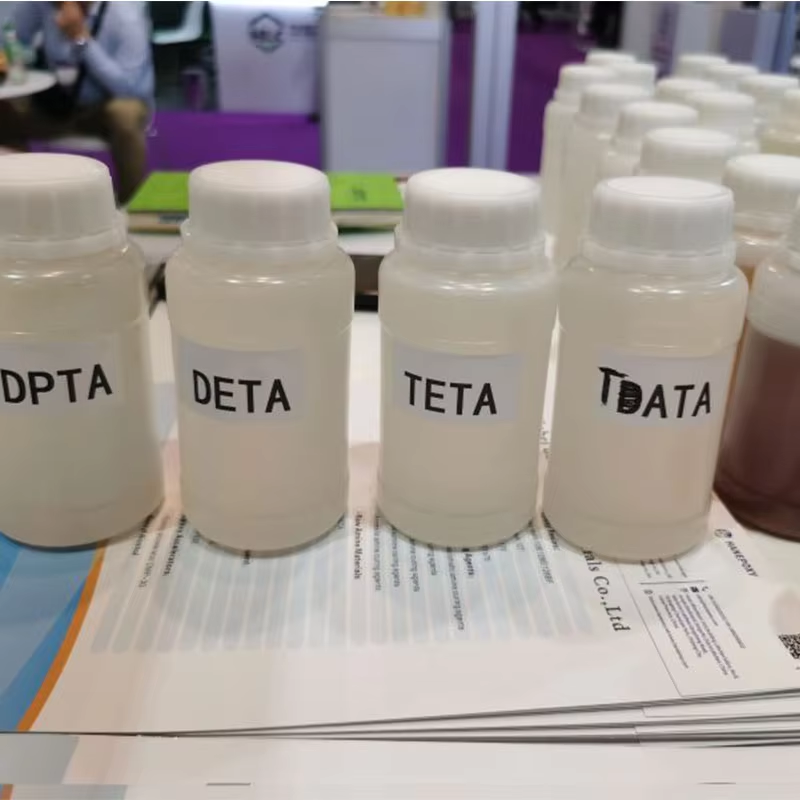
Why Aliphatic Amines Deliver Rapid, High-Strength Epoxy Cures
Kinetics of nucleophilic addition: How primary amine reactivity enables fast gelation and early strength development
When it comes to speeding up epoxy curing, aliphatic amines work their magic through nucleophilic addition processes. Primary amine groups (-NH2) basically tear into those epoxide rings quickly, creating covalent bonds that make everything crosslink fast. What happens here follows what chemists call second order kinetics. So when we increase either the amount of amine or raise the temperature, the curing process doesn't just get faster it gets exponentially faster. Compared to aromatic amines or those latent catalysts, these aliphatic versions are much better at donating electrons from their nitrogen atoms. Tests show they can boost ring opening rates somewhere around 30 to 40 percent in typical DGEBA systems. The end result? Gelation occurs really fast sometimes within half an hour delivering that crucial early strength needed for composite manufacturing. This matters because it helps prevent fibers from getting out of alignment during layup operations and cuts down on the need for all sorts of jigs and fixtures throughout production runs.
Ambient-cure performance benchmark: DETA- and TETA-cured DGEBA achieving >85 MPa tensile strength in 24 h
Diethylenetriamine (DETA) and triethylenetetramine (TETA) are industry benchmarks for ambient-cure epoxy performance. When reacted with diglycidyl ether of bisphenol-A (DGEBA) at 23°C and 50% RH, they consistently meet—and exceed—structural requirements without post-cure heating:
| Property | DETA-Cured System | TETA-Cured System | Industry Requirement |
|---|---|---|---|
| Tensile Strength | >85 MPa | >88 MPa | >60 MPa |
| Gel Time (min) | 20–25 | 15–20 | <60 |
| Full Cure (hrs) | 18–24 | 16–22 | 24 |
Their low molecular weight and high amine functionality enable dense, uniform crosslinking—directly translating to robust mechanical performance in large-scale or heat-sensitive applications like wind turbine blades or bonded electronics housings.
Aliphatic Amine Structure–Property Relationships: Tuning Crosslink Density and Network Homogeneity
Functionality effects: Triamines (e.g., TETA) vs. diamines (e.g., DETA) — quantifying crosslink density via DMA and solvent swelling
When comparing triamine hardeners like TETA to diamines such as DETA, there's a noticeable difference in network formation. TETA creates much denser structures simply because it provides around 50% more reaction points compared to DETA, which naturally leads to higher crosslink density throughout the material. Dynamic Mechanical Analysis backs this up pretty convincingly too. Epoxies cured with TETA typically reach glass transition temperatures (Tg) about 15 degrees Celsius above those made with DETA. This temperature difference tells us something important about how tightly the polymer chains are locked together. We also see this effect when testing solvent swelling. Put TETA networks in acetone and they expand only 20 to 30 percent less volume than DETA counterparts. That speaks volumes about the structural tightness of these materials. For anyone working on formulation development, these kinds of measurable distinctions matter a lot. They give formulators real control over selecting the right amine type based on what the final product needs to withstand thermally, chemically, or structurally in its intended application environment.
Amine architecture impact: Primary/secondary ratio and alkyl chain length govern Tg, fracture toughness, and cure uniformity
The way molecules are put together goes beyond just basic function and actually determines how well materials perform. Take alkyl spacers for instance. Short ones like ethylene bridges really limit how much the chains can move around compared to longer propylene chains. This restriction raises the glass transition temperature (Tg) somewhere between 25 to 40 degrees Celsius, but comes at a cost since impact resistance drops by about 35%. When it comes to amines, primary types tend to react quicker but create stiffer structures that break easier. Secondary amines on the other hand form those flexible connections that make materials bend better and cure more evenly across surfaces. Keeping the primary to secondary ratio under 2 to 1 seems to strike the right balance most of the time. It helps ensure everything converts properly during processing without leaving those weak spots where curing was incomplete. For industries needing reliable materials, such as aircraft components or battery casings in electric vehicles, getting this molecular structure right makes all the difference in product longevity and safety.
Balancing Strength and Toughness in Aliphatic Amine-Cured Epoxy Composites
The brittleness trade-off: IPDAâs high modulus (3.2 GPa) versus reduced impact resistance vs. DETA
Choosing aliphatic amines means walking a tightrope between stiffness and toughness in material design. Take IPDA for instance. This stuff has this really rigid cycloaliphatic structure that gives amazing tensile strength around 3.2 GPa. But here's the catch. It doesn't handle impacts very well at all. We see microcracks forming when materials go through repeated temperature changes or get hit by sudden shocks. On the flip side, those straight chain amines such as DETA give up some stiffness (about 2.1 GPa) but make up for it with better energy absorption thanks to those flexible carbon chains connecting everything together. The reason behind this tradeoff? All comes down to how densely things crosslink. IPDA just can't pack as much without getting too crowded, creating these stiff but fragile networks. Meanwhile, DETA's less crowded structure allows chains to move around just enough to soak up impact energy before it causes damage.
| Property | IPDA | DETA |
|---|---|---|
| Tensile Modulus | 3.2 GPa (High) | ~2.1 GPa (Moderate) |
| Impact Resistance | Reduced (Brittle) | Enhanced (Tough) |
| Trade-off | Strength-dominated | Toughness-dominated |
Hybrid curing strategies: Combining aliphatic amines with aromatic or polyether-modified amines to retain strength while enhancing ductility
The challenge of balancing strength and toughness has led many manufacturers to turn toward hybrid hardener systems these days. Recent research published in BMC Chemistry back in 2024 showed something interesting when they mixed IPDA with TETA at about a 3 to 1 ratio. What happened? They kept the compressive strength around 94 MPa but saw a pretty impressive 40% boost in how well it resisted fractures compared to just using pure IPDA alone. And guess what? The curing time at room temperature stayed basically the same too. These hybrid formulas work because they combine aromatic components which help with heat resistance along with polyether parts that give chains more flexibility, creating this sort of intertwined network structure. When materials form these separate phases during processing, they actually become points where stress builds up. This leads to tiny cracks forming in a controlled way that absorbs energy instead of letting damage spread uncontrollably. So we get better protection against failure without losing those fast curing times and strong mechanical properties that come from aliphatic compounds.
FAQ Section
What are aliphatic amines?
Aliphatic amines are a class of amines that primarily contain open-chain molecular structures, typically featuring carbon-nitrogen bonds. They are used in epoxy curing processes due to their ability to rapidly initiate crosslinking reactions.
How does ambient-cure epoxy work?
Ambient-cure epoxies are designed to harden at room temperature without the need for additional heating. The use of hardeners like Diethylenetriamine (DETA) and Triethylenetetramine (TETA) ensure rapid curing and high tensile strength.
What is the difference between primary and secondary amines in epoxy curing?
Primary amines react more quickly in epoxy curing, leading to stiffer structures, while secondary amines form more flexible connections, resulting in better bendability and even curing across surfaces.
What is the significance of using hybrid curing strategies?
Hybrid curing strategies combine aliphatic amines with aromatic or polyether-modified amines to balance strength and ductility, offering improved fracture resistance and maintaining essential mechanical properties.